

What Causes Solar Permit Delays in Florida?

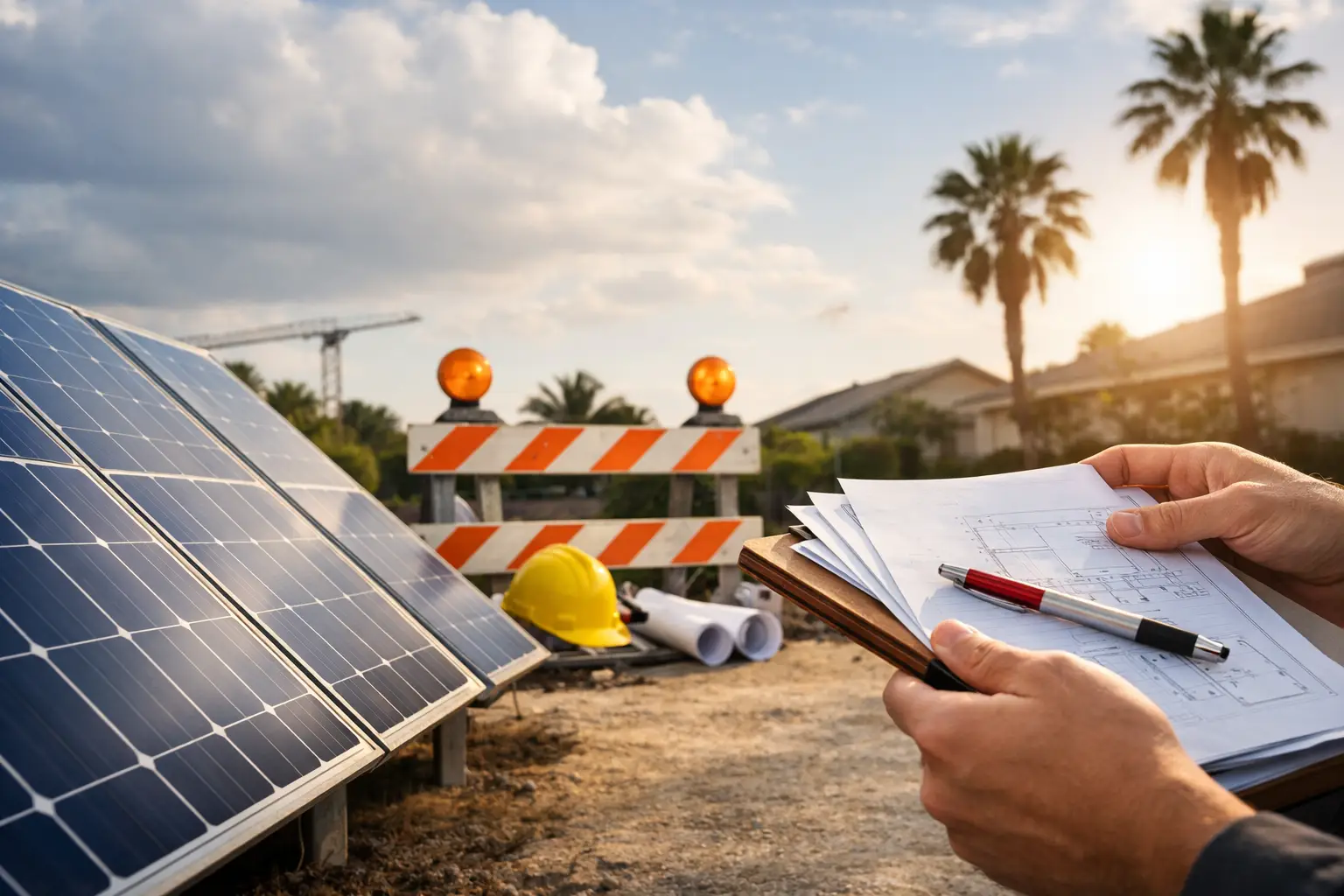
A solar project can be ready to move forward while its permit is still waiting on one missing detail. That is why homeowners and property managers often ask, what causes solar permit delays? The answer is usually not one major problem. More often, it is a mismatch between the plans submitted, the existing property conditions, and the requirements of the local building department.
In South Florida, solar permits protect the property owner, the building, and the electrical system. They confirm that the proposed work meets applicable building, electrical, structural, and fire-safety standards before installation and final approval. When the process is managed correctly, it creates a clear path from design to inspection. When a detail is incomplete, however, the municipality may issue comments that must be resolved before the permit can proceed.
The good news is that permit delays are manageable. Knowing where they come from helps property owners respond quickly and keep their project organized.
What Causes Solar Permit Delays Most Often?
The most common delays begin with incomplete or inconsistent permit documents. A solar application typically includes site plans, electrical diagrams, equipment specifications, structural information, and contractor documentation. Those documents must agree with each other. If the panel count on one drawing differs from the layout on another, or if the inverter information does not match the electrical plan, the reviewer will request clarification.
A clear, property-specific plan set prevents much of this back-and-forth. Generic drawings or paperwork that does not accurately reflect the home or commercial building can create avoidable revisions. Accurate system design matters because the municipality is reviewing the actual work proposed for that address, not a standard concept.
Structural details and roof conditions
Solar panels add equipment to the roof, so local reviewers need confirmation that the structure can support the installation and that the mounting approach is appropriate. Missing roof information, unclear attachment details, or outdated structural documentation can hold up a permit review.
Roof condition also matters. If a roof needs repair or replacement before solar work can be completed, the project sequence must be coordinated properly. Installing solar on a roof that is about to be replaced creates unnecessary disruption later. Addressing roofing needs early gives the solar plan a stable foundation and helps avoid revisions after permits are already underway.
For commercial properties, the review may involve additional considerations, such as roof access, equipment placement, or the relationship between solar components and existing building systems. These are normal project details, but they need to be documented clearly from the start.
Electrical capacity and equipment conflicts
A solar system connects to the property’s existing electrical service. If the main panel, meter arrangement, disconnect location, or service capacity is not reflected accurately in the plans, reviewers may request corrections. This is especially common on older properties, properties with previous renovations, or buildings where electrical work was completed at different times.
The solution is not to treat the existing electrical system as an afterthought. A thorough site assessment identifies whether the proposed solar equipment fits the property as it stands or whether an upgrade, correction, or revised design is needed. Battery backup systems and solar additions to an existing array can require extra coordination because they must work safely with equipment already in place.
Municipal Review Timelines Can Vary
Miami-Dade, Broward, and Palm Beach County communities do not always review permits on the same schedule or through the same process. Some municipalities have separate building, electrical, structural, zoning, or fire review steps. Others may process a straightforward residential submission efficiently but require more documentation for a larger commercial system or a property with unusual conditions.
That variation does not mean the project is off track. It means the permit strategy should match the jurisdiction. A complete submission reduces the chance that a file will be returned for corrections, but review timing can still depend on municipal workload, holidays, staffing, and the number of permit disciplines involved.
Property owners can help by providing requested documents promptly, particularly when the building department needs information related to the property’s existing construction or prior improvements. Fast communication keeps a minor comment from becoming a long pause.
Open, expired, or unresolved permits
An open permit from earlier work can complicate a new solar permit. Municipal records may show that a prior roofing, electrical, renovation, or solar project was never finalized. In other cases, a solar permit may have expired because the original work was not completed or final inspections were never passed.
These situations are solvable, but they often need to be resolved before the city will close the file or approve new work. The path forward depends on what was permitted, what work was completed, and what documentation remains available. A licensed contractor can evaluate the record, identify the correction required, coordinate necessary work, and pursue final municipal approval.
This is where experience matters. An unresolved permit is not a reason to abandon an upgrade. It is a property issue that needs a defined resolution plan. For homeowners and commercial decision-makers, closing old permit issues can also create a cleaner record for future improvements.
Installation Changes Can Trigger Revisions
Permit plans should guide the installation, but real properties sometimes require an adjustment. A roof obstruction may affect panel placement. An electrical condition may require a different equipment location. Equipment availability may call for a comparable component that still needs plan approval.
Changes are manageable when they are documented and submitted correctly. Problems arise when work in the field no longer matches the approved permit set and the difference is discovered during inspection. That can lead to a correction notice, a revised plan requirement, or an additional inspection.
The practical approach is simple: keep the design, permit documents, and installation team aligned. When a change is necessary, address it before it becomes an inspection issue. This protects the project schedule and supports a clean final approval.
Inspections Require Finished, Accessible Work
A permit is not complete until required inspections have passed. Inspection delays are often caused by work that is not fully ready when the appointment arrives. Equipment may be installed but not labeled, access may be limited, or a required component may still be pending. A missed inspection appointment can also push the timeline back, depending on the municipality’s availability.
Preparation makes the difference. The system should match the approved plans, required labels should be in place, and the inspection area should be accessible. If an inspector identifies a correction, the fastest route is to understand the comment precisely, complete the correction properly, and schedule the follow-up inspection without delay.
For a property owner, the key is accountability. Permit management does not end when documents are submitted or panels are installed. It ends when the city or county record shows that the work has received final approval.
How to Keep a Solar Permit Moving
The strongest permit process starts before the application is filed. It begins with an accurate site assessment, a design that reflects the property, and complete documentation prepared for the correct jurisdiction. It continues with responsive communication when a reviewer requests clarification and disciplined coordination during installation and inspection.
There is a trade-off in rushing paperwork: submitting too early with incomplete details may feel faster, but revisions can add more time than a careful initial submission. A well-managed process focuses on getting the important details right, then moving each approval step forward without losing momentum.
For properties with old solar permits, electrical code concerns, incomplete installations, or expired approvals, the first step is to identify the exact municipal issue rather than guessing. Solar Construction LLC helps homeowners and commercial property owners resolve these records, complete needed corrections, and work toward final approval with licensed professional support.
Your solar investment deserves more than an installation date. It deserves a documented, approved system that is ready to perform for the property it serves.