
Do I Need a New Roof Before Solar Panels?

A solar system is built to serve your property for decades. Your roof needs to be ready for the same commitment. If you are asking, “do I need a new roof before solar,” the right answer depends on the roof’s current condition, not simply its age. A sound roof creates a cleaner installation, protects your investment, and helps prevent the disruption of removing and reinstalling panels for a roof project later.
For homes and commercial buildings in South Florida, the decision also carries extra weight. Intense sun, heavy rain, humidity, and hurricane-season conditions put roofing systems to work year after year. A professional assessment before solar gives you a clear path forward: install solar on the existing roof with confidence, complete targeted roof work first, or replace the roof before the solar installation begins.
Do I Need a New Roof Before Solar? Start With Condition
You do not automatically need a new roof simply because you want solar panels. Many well-maintained roofs are excellent candidates for a solar installation. What matters is whether the roof can continue protecting the structure through the expected life of the solar system.
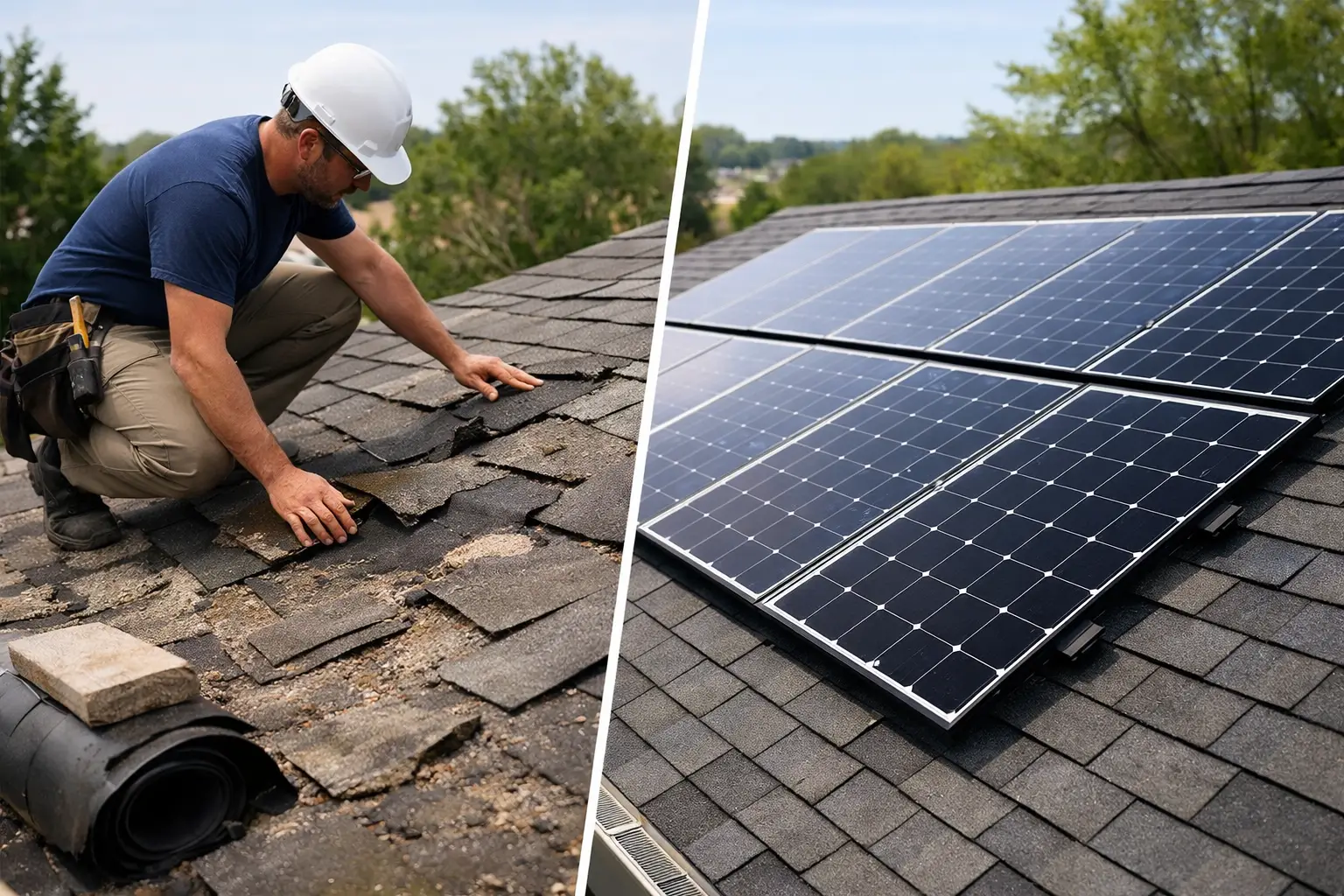
A roof that is dry, structurally sound, properly sealed, and free of active deterioration can often support solar without major roofing work. Conversely, a roof with recurring leaks, weakened areas, loose or damaged materials, worn flashing, or visible signs of aging may need attention before panels are installed.
This is why a roof assessment should happen early in the project. It prevents the installation team from designing a system around roofing conditions that will soon require a separate construction project. Addressing known roof needs first creates one coordinated plan rather than two projects competing for the same space.
Why Roof Timing Matters for Your Solar Investment
Solar panels are mounted securely and designed to stay in place. If a roof replacement becomes necessary after installation, the panels and related equipment generally need to be professionally removed, stored, and reinstalled once the new roof is complete. That process is manageable, but it adds scheduling, labor, permitting coordination, and another construction phase to the property.
Replacing an aging roof before a new solar installation can avoid that extra work. It also gives the installation team a fresh, reliable surface for mounting equipment and planning the best layout for production and roof access.
There is a practical middle ground as well. Some properties do not need a full replacement but may benefit from repairs in specific areas before solar work begins. Correcting a localized issue, replacing compromised sections, or improving waterproofing around roof penetrations can prepare the roof for a long-term solar system without taking on unnecessary work.
The goal is not to replace a roof prematurely. The goal is to make a decision that protects the structure and supports the full value of the solar project.
Roof Signs That Deserve Attention Before Solar
A visual review may reveal obvious issues, but a proper assessment looks beyond surface appearance. Water stains inside the building, soft roof areas, cracked or missing materials, damaged flashing, persistent ponding on low-slope roofs, and repairs that have not held up over time are all reasons to evaluate the roof before installing solar.
Roof age can also provide useful context, especially when the roof is approaching the later part of its expected service life. Age alone does not determine whether replacement is necessary. A well-maintained roof may still have plenty of useful life, while a newer roof exposed to storm damage or installation defects may need repairs sooner than expected.
For property owners, the strongest approach is to pair a roofing evaluation with the solar site assessment. That allows the project plan to account for the roof structure, usable mounting areas, shading, electrical equipment location, and access requirements at the same time.
Different Roof Types Need Different Planning
South Florida properties have a wide range of roofing systems, including shingle roofs, concrete or clay tile roofs, metal roofs, and flat or low-slope commercial roofs. Each can support solar when it is in good condition and the mounting approach is matched to the material.
Tile roofs require careful handling because individual tiles can be damaged if they are walked on or moved improperly. Shingle roofs need secure mounting and proper waterproofing at every attachment point. Metal roofs may offer efficient mounting options depending on the profile and condition of the panels. Flat roofs require thoughtful design for drainage, wind conditions, equipment spacing, and maintenance access.
The roof type does not need to become a roadblock. It simply shapes the installation plan. A qualified solar contractor evaluates the roof and designs around its material, slope, condition, and structural requirements so the finished system looks professional and performs as intended.
New Construction, Recent Roofs, and Roof Replacements
If you recently installed a new roof, that is often an ideal time to move forward with solar. The roof is typically ready for a long-term installation, and the solar design can be planned around its layout from the beginning.
If you are already scheduling a roof replacement, coordinating solar immediately afterward is equally smart. The roof can be completed first, then the solar system can be installed on a clean surface without the future need for panel removal. This sequence is especially valuable for homeowners who want to improve energy efficiency, storm readiness, and property value through connected upgrades.
For commercial properties, coordinating roof and solar work can reduce operational disruption. A facility manager can align access, equipment placement, construction timing, and permitting requirements within one organized property plan instead of revisiting the roof soon after solar goes live.
Permits and Roofing Issues Are Solvable
Roofing conditions can affect how a solar project moves through permitting and inspection, but they do not need to stop progress. The right contractor identifies what needs to be corrected, organizes the work, and keeps the project moving toward approval.
This is particularly helpful for properties with an existing solar system, open permits, expired permits, incomplete work, or code-related issues that need resolution. Solar Construction LLC handles solar-related problem resolution from diagnosis through final municipal approval, including panel removal and reinstallation when a roof project requires it.
That accountability matters. Your property should not be left with disconnected contractors, unclear responsibilities, or unfinished permit steps. A coordinated team can assess the roof, define the solar scope, complete the necessary work, and support a compliant final result.
What the Assessment Should Deliver
A useful roof and solar assessment should leave you with a clear recommendation, not more uncertainty. You should understand whether the existing roof is ready, whether repairs should be completed first, or whether replacement is the most practical choice before installing solar.
The assessment should also account for the areas where panels can be placed, the condition of those specific roof planes, and how the installation will protect the roof from water intrusion. For commercial buildings, it should consider rooftop equipment, drainage paths, maintenance routes, and the building’s operational needs.
This level of planning supports better outcomes. It helps preserve roof performance, keeps the solar installation organized, and gives you confidence that both systems are working toward the same long-term objective.
Move Forward With a Property Plan That Holds Up
A new roof before solar is sometimes the best decision, but it is never a decision that should be made on guesswork. The strongest projects begin with a direct assessment of the roof you have and a practical plan for the property you want to improve.
Whether your roof is ready today, needs focused repairs, or should be replaced before panels are installed, the next step is simple: get a professional evaluation and build the solar project around a roof that is prepared to support it for years to come.