
Solar Contractor Fort Lauderdale for Real Results

A property in Fort Lauderdale should work harder for its owner. A properly designed solar system can reduce dependence on utility power, support long-term energy goals, and add meaningful resilience when paired with battery backup. The right solar contractor Fort Lauderdale property owners choose is not simply there to mount panels. They manage the work from the property assessment through permits, installation, system performance, and final approval.
That level of execution matters in South Florida, where strong sun, storm exposure, roof conditions, local code requirements, and property-specific energy needs all shape the project. Residential homeowners and commercial decision-makers deserve a solar solution built around their building, not a one-size-fits-all package.
What a Solar Contractor in Fort Lauderdale Should Deliver
Solar is a property improvement project with electrical, structural, and municipal requirements. A licensed contractor brings those moving parts together and keeps the project accountable from start to finish.
It begins with a clear look at the property. Energy use, available roof space, roof condition, electrical equipment, shading, and future plans all affect the recommended system. A family planning to add electric vehicles, a pool heater, or additional living space may have different needs than a homeowner focused on offsetting current usage. A commercial property may need a design that supports daytime operations, tenant loads, or a broader energy-efficiency strategy.
The goal is not to install the largest system possible. It is to design the system that fits the building, the owner’s objectives, and the site conditions while leaving room for smart upgrades where they make sense.
A complete solar contractor also coordinates the work that keeps a project moving. That includes system design, permitting, installation, inspections, utility interconnection, and communication throughout the process. Instead of leaving the owner to sort out technical details between separate parties, the contractor takes responsibility for execution.
Solar Installation Built for South Florida Properties
Fort Lauderdale properties experience intense sunlight, heavy rain, humid conditions, and storm seasons that call for careful construction. Solar equipment and mounting methods need to be selected and installed with the roof, structure, and local requirements in mind.
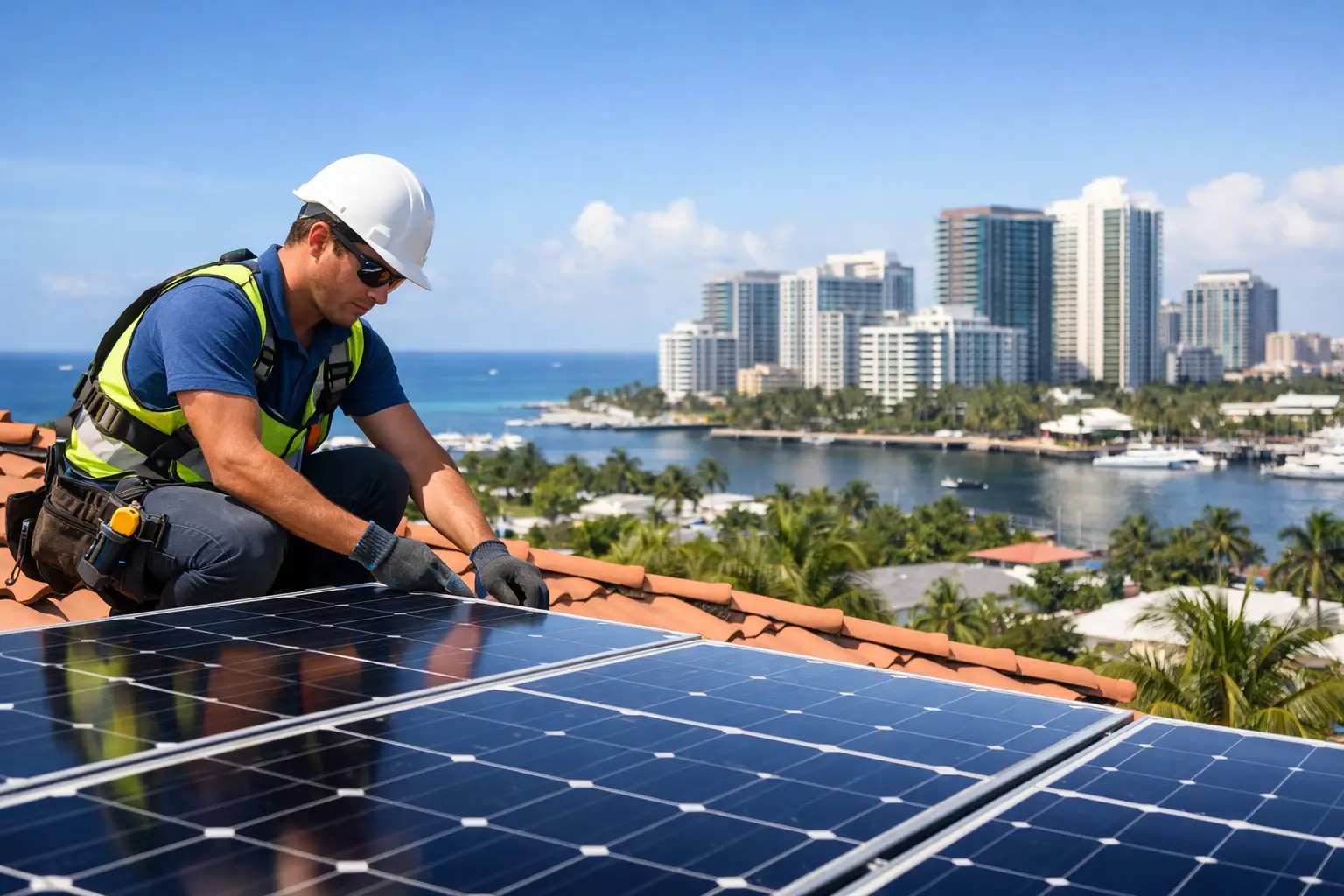
For homeowners, the process should feel straightforward. After an on-site review and consultation, the solar plan is tailored to the home’s energy profile and roof layout. The installation team then completes the approved work professionally, with attention to clean routing, secure mounting, and system performance.
Commercial solar requires the same discipline at a larger operational level. Business owners and facility managers may need to consider building access, production schedules, tenant coordination, electrical capacity, and long-term maintenance. A contractor experienced in both residential and commercial work can organize the project around the property’s day-to-day needs instead of disrupting them.
Roof condition deserves attention before solar work begins. If a roof needs repairs or replacement, addressing it first protects the value of the solar investment and avoids unnecessary disruption later. Solar Construction LLC can assess roofing needs as part of the planning process and coordinate solar panel removal and reinstallation when a roof project is required.
New Systems, Additions, and Upgrades
Solar needs can change as a property changes. A system installed years ago may have been sized for a different household, different business use, or lower electricity demand. Panel additions can help support increased usage, while an inverter replacement can improve the performance of an existing system.
These projects require more than adding equipment. The contractor must evaluate the existing installation, electrical configuration, equipment compatibility, roof capacity, and permit requirements. When the work is planned correctly, an upgrade becomes a practical way to keep the property’s energy infrastructure aligned with current needs.
Battery backup is another valuable option for owners who want greater control during utility interruptions. Solar panels produce energy when the sun is available, while a battery stores energy for use when it is needed. The best battery approach depends on the property’s priorities. Some owners want support for essential loads, while others want broader backup coverage for key areas of the home or business.
Permit Resolution Is Part of Real Contractor Support
Not every solar project begins with a clean slate. A property can have an open permit, an expired permit, incomplete work, electrical corrections, or a municipal compliance item that must be resolved by a licensed contractor. These are manageable project conditions, and they should be handled with a direct plan.
Solar Construction identifies what is needed, coordinates the required corrections, manages the permit process, and works toward final city approval. That service is especially valuable for property owners who inherited an existing solar situation, are preparing to sell or refinance, or simply want their records brought into proper standing.
The strongest outcome is a fully resolved project, not a partial repair that leaves municipal paperwork unfinished. Professional follow-through protects the property and gives the owner a clear path forward.
Service That Restores System Performance
A solar system is an active piece of energy equipment. When production does not appear to match expectations or a component needs attention, timely technical service can bring the system back on track.
Service may involve reviewing the inverter, electrical connections, monitoring information, panel output, or other system components. The purpose is clear: identify the source of the issue, make the proper correction, and verify that the system is operating as intended. Homeowners should not have to live with unanswered alerts or uncertainty about their system’s output.
This is one reason long-term contractor support matters. Installation is the beginning of the relationship, not the end of the responsibility. Whether the property needs a technical correction, an equipment upgrade, or panel removal for roof work, an experienced team can provide a practical next step.
More Than Solar: A Stronger Property Strategy
Energy efficiency and storm protection often belong in the same property conversation. Impact windows and doors can strengthen protection against severe weather while contributing to a more comfortable, efficient interior. For owners planning several major improvements, coordinating solar and impact upgrades through one provider can simplify scheduling and keep the overall plan focused on property value.
There is no single sequence that fits every building. A newer home with a strong roof may be ready to move directly into solar design. An older property may benefit from roof evaluation, electrical updates, or impact protection as part of a larger improvement plan. The right approach is the one that matches the property’s actual condition and the owner’s priorities.
Financing can also make a new solar installation more accessible. Bank loan and lease options give qualified homeowners and commercial owners ways to move forward without treating the project as an all-at-once expense. Because every system depends on the property, equipment selection, and project scope, a consultation is the right place to discuss the available path.
Choosing a Solar Contractor Fort Lauderdale Can Rely On
A solar project should produce more than panels on a roof. It should deliver a well-managed energy improvement backed by licensed work, organized permitting, responsive service, and solutions that fit the property.
For a home near the coast, a growing family property, a retail building, or a multi-use commercial site, the details matter. The roof must be ready. The electrical work must be right. The permits must be complete. The system must be designed for the way the building actually uses power.
That is the difference between a basic installation and a solar project that supports the property for years. Start with a professional assessment, bring the full scope of the property into view, and move forward with a team prepared to handle the work all the way to completion.