

Solar Batteries Comparison for Florida Homes

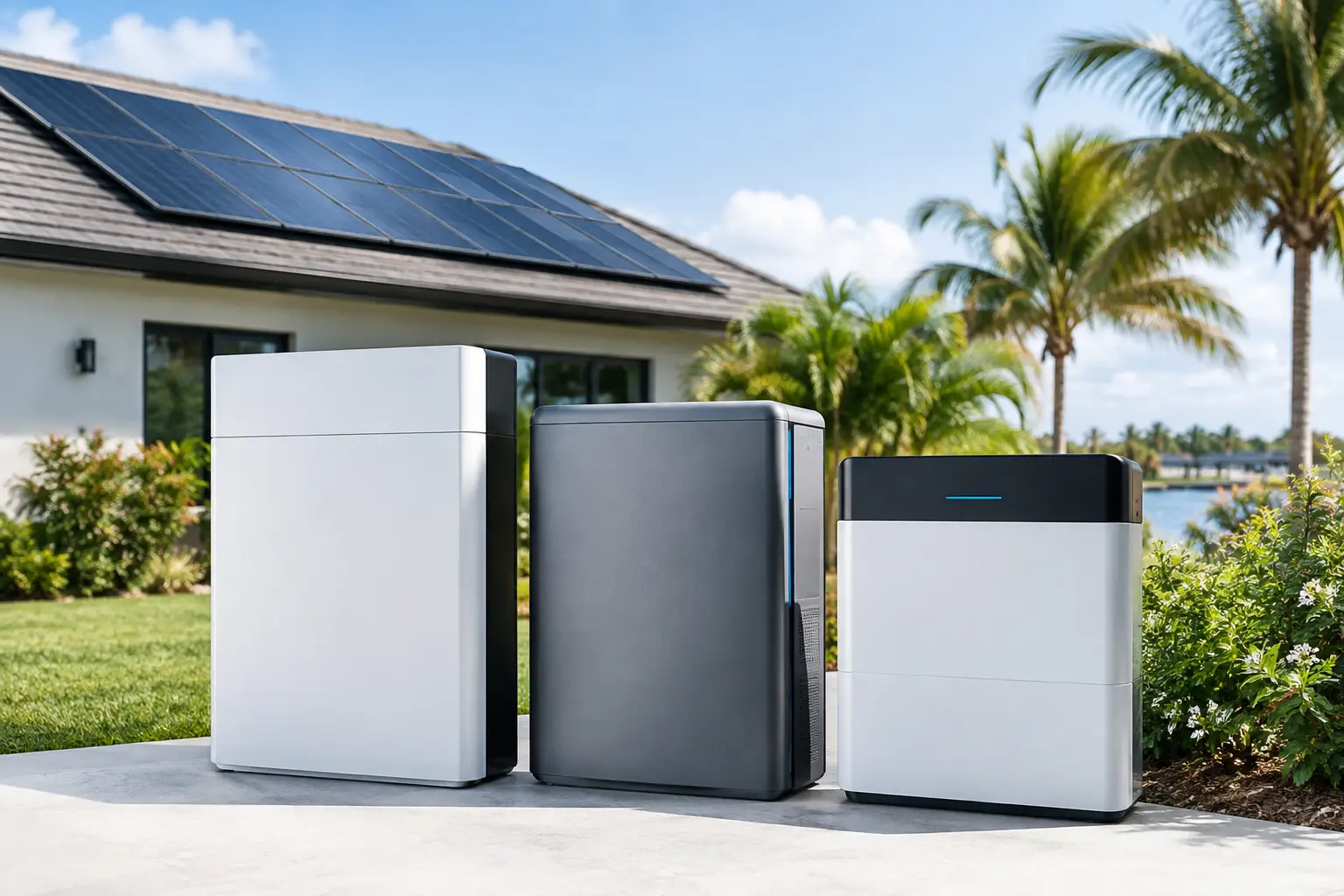
A solar batteries comparison is not about picking the biggest unit on a spec sheet. It is about deciding what needs to stay on when the grid goes down, how your property uses electricity, and how your solar system should perform over the years ahead. For South Florida homeowners and commercial property owners, the right battery turns solar production into usable backup power when it matters most.
A battery can keep essential circuits operating during an outage, reduce reliance on the utility at high-use times, and make a solar investment more useful after sunset. The right choice depends on your goals, not a one-size-fits-all package.
Solar Batteries Comparison: What Actually Matters
Most battery decisions come down to five connected factors: usable storage capacity, power output, backup priorities, compatibility with the existing solar equipment, and warranty coverage. These features sound similar, but they answer different questions.
Storage capacity is measured in kilowatt-hours, or kWh. It tells you how much energy the battery can hold. Think of it as the size of the fuel tank. A larger capacity can support more usage or provide backup for a longer period.
Power output is measured in kilowatts, or kW. It tells you how much electricity the battery can deliver at one time. This is what determines whether the battery can start and run high-demand equipment alongside your everyday essentials. A battery with ample storage but limited power may cover lights, internet, refrigeration, and selected outlets well, while larger equipment may require a system designed for greater output.
For most homes, the best starting point is not the total size of the home. It is the list of loads you want protected. Refrigerators, lighting, Wi-Fi, security systems, garage doors, select kitchen outlets, and medical equipment are common priorities. Some owners also want broader coverage for air conditioning, pool equipment, electric cooking, or an entire property. Each approach is valid, but they require different system designs.
Essential-Load Backup vs. Whole-Home Backup
Essential-load backup focuses battery power on the circuits that keep daily life moving. It is a practical option for homeowners who want dependable coverage for the items they rely on most during an outage. A properly designed essential-load system can provide meaningful resilience without attempting to power every electrical demand at once.
Whole-home backup is designed for owners who want more comprehensive coverage. It may support a larger portion of the electrical panel and can be engineered around major loads. The final design depends on equipment size, startup demand, available solar production, and the way the property is used.
The distinction matters because backup power is a plan, not merely a product. A well-matched system lets you use stored energy with confidence instead of guessing which appliances can run together.
Comparing Battery Capacity for Your Property
Capacity should match your expected use during an outage and your broader energy goals. A family that mainly wants to protect food, connectivity, lighting, and basic comfort has different needs than a property owner running a home office, a large residence, or a commercial facility with critical equipment.
Battery systems can often be expanded with additional units. This creates a clear path for properties that need more stored energy over time. It is especially useful when a homeowner plans future panel additions, expects higher electricity use, or wants the flexibility to add more backup coverage later.
Capacity also works differently when solar panels are producing. During daylight hours, a solar system can power active loads and recharge the battery when conditions allow. At night, the battery provides stored energy. The goal is to design the solar array, inverter, battery, and protected loads as one coordinated system.
For commercial properties, capacity planning should reflect operating priorities. A business may need to maintain communications, security, refrigeration, network equipment, lighting, or selected work areas. A focused backup plan can protect the functions that keep operations organized and responsive.
Power Output Makes a Real Difference
When comparing batteries, do not overlook continuous power and surge capability. Continuous power refers to what the battery can supply steadily. Surge capability relates to short bursts of demand, such as when certain motors or appliances start.
This is especially relevant for air conditioning and other equipment with high startup requirements. The answer is not simply to select a larger battery. It is to evaluate the electrical loads and configure the backup system correctly. In some cases, smart load management can prioritize essential power while reducing unnecessary demand during an outage.
A professional assessment gives you a realistic picture of what your selected battery setup can support. That clarity is more valuable than choosing based on capacity alone.
Battery Chemistry, Safety, and Useful Life
Many modern solar batteries use lithium-ion technology, with lithium iron phosphate commonly used in residential backup systems. This chemistry is widely chosen for its long service life, dependable performance, and strong safety profile.
Rather than focusing only on the number of years in a warranty, look at the complete warranty structure. Battery warranties commonly address time, retained capacity, energy throughput, and operating conditions. The practical question is whether the battery is supported by a system design and installation that helps it deliver reliable service throughout its intended life.
Placement also matters. Batteries must be installed in an approved location with proper electrical protection and according to manufacturer requirements and local code. In South Florida, a professional installation should account for the property layout, access, equipment clearances, and the complete solar electrical system. Solar Construction manages battery installations with the same attention to permitting, electrical compliance, and final approval that complex solar projects require.
Compatibility With Your Existing Solar System
A battery installation is most straightforward when the new equipment is designed to work with the system already on the property. The inverter is central to this decision. Some battery solutions work best with specific inverter platforms, while others can be added in a way that supports a wider range of existing solar systems.
This does not mean an older or incomplete solar installation cannot move forward. It means the equipment must be evaluated correctly before the final design is selected. If your system needs an inverter replacement, panel additions, technical service, or permit resolution, those needs can be addressed as part of a coordinated project.
The advantage of a full-system review is simple: your battery should enhance solar production, not create an isolated piece of equipment that does not match how your property operates.
A Practical Solar Battery Comparison Checklist
Use these points to compare battery options with a clear purpose:
- Usable capacity: How long can the battery support your priority loads?
- Power output: What can it run at the same time, including higher-demand equipment?
- Expansion options: Can more storage be added if your needs grow?
- Inverter compatibility: Does the battery integrate properly with your current or planned solar equipment?
- Backup design: Are you protecting selected circuits or pursuing broader property coverage?
- Warranty and support: Does the equipment have dependable coverage and professional installation support?
The strongest option is the one that aligns these factors with your property, not the one with the most impressive single number.
When to Add a Battery to Solar
Adding a battery makes sense when you want your solar system to provide more control during grid interruptions and more value from the energy your panels produce. It can be installed with a new solar system or incorporated into an existing one after a technical evaluation.
For homeowners, battery backup adds confidence during severe weather and unexpected outages. For commercial owners, it can help preserve continuity for essential operations and protect key systems. The exact investment varies with system size, property conditions, electrical needs, and backup goals, so a site-specific consultation is the right way to build an accurate plan.
A good battery system should feel purposeful from day one. Define what you need to protect, let the electrical design follow that priority, and choose a licensed team that can carry the project through installation, permitting, and final approval.