
Best Backup Power Options for Hurricanes

A hurricane outage is not the time to decide what needs power. In South Florida, extended outages can affect refrigeration, air conditioning, internet service, security equipment, medical devices, and the ability to keep a business operating. The best backup power options for hurricanes are the ones sized around the loads that matter most, installed correctly, and ready before storm season arrives.
For many properties, the strongest answer is not simply buying the largest generator available. It is building a backup plan that matches the property, the people who rely on it, and the duration of an outage. A battery can provide quiet, automatic power for essential circuits. A generator can support larger loads for longer periods with an appropriate fuel plan. A solar-and-battery system can add daily energy production after the storm passes.
Best Backup Power Options for Hurricanes at a Glance
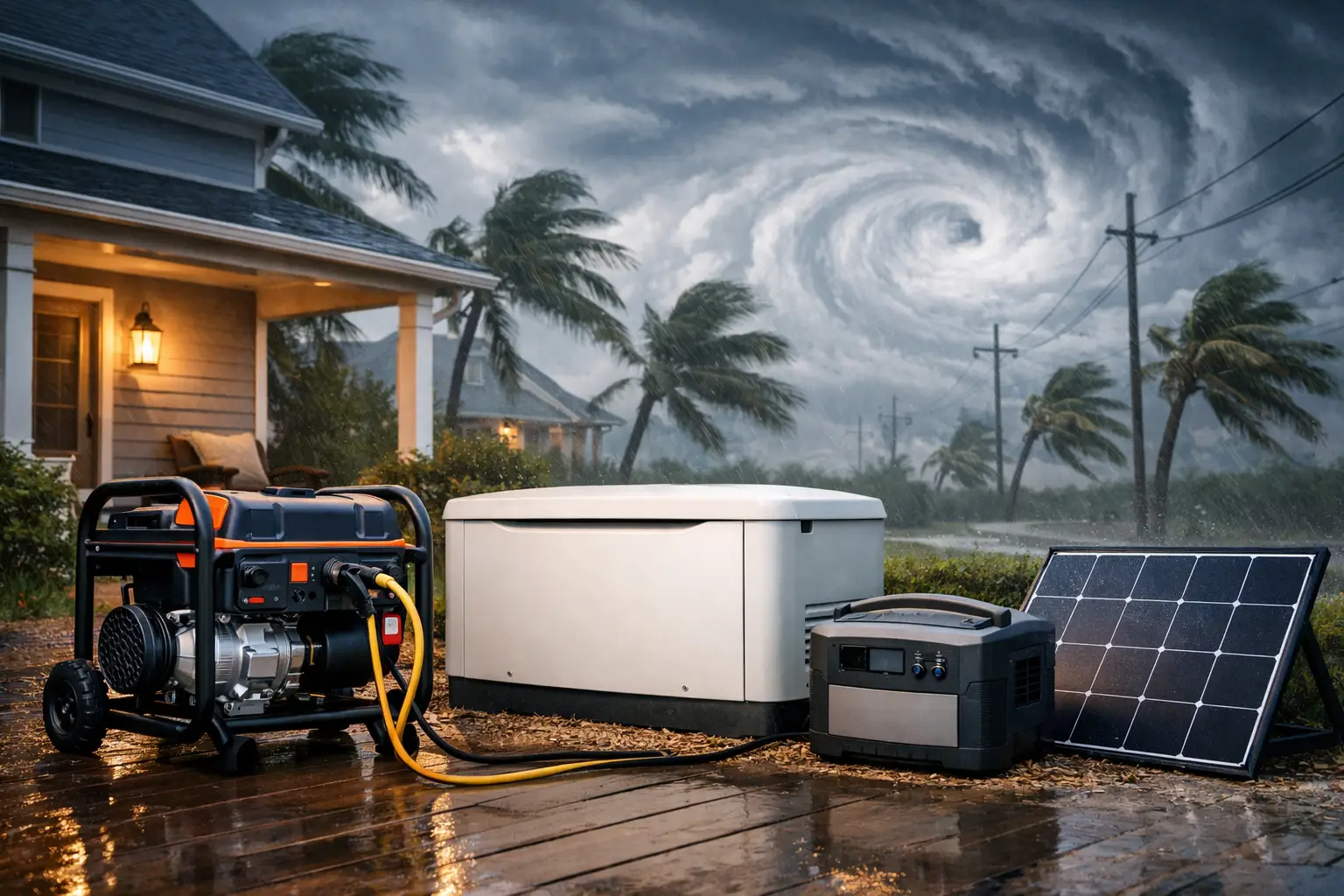
Backup power usually falls into three practical categories: portable generators, permanently installed standby generators, and solar battery storage. Each can protect a property, but they deliver a different level of convenience, capacity, and independence.
A portable generator is a practical entry point for homeowners who want to keep select essentials running. It can support a refrigerator, lights, charging stations, a router, and possibly a small window air conditioner, depending on its output and the loads connected. It must be operated outdoors, away from doors, windows, and vents, and it should connect through professionally installed equipment rather than improvised extension-cord setups.
A standby generator is permanently installed and can start automatically when utility power fails. This is a strong choice for properties that need broader coverage, such as central air conditioning, well pumps, elevators, refrigeration, security systems, or multiple tenant areas. It is especially useful when owners may be away during an outage or when a business cannot afford to wait for someone to start equipment manually.
Solar battery backup stores electricity for use when the grid is unavailable. It operates quietly, switches on automatically, and does not require fuel storage at the property. When paired with solar panels configured for backup operation, the system can recharge from sunlight during the day, helping extend coverage through a multi-day outage. For many South Florida homes, this is the most comfortable solution for essential loads and everyday resilience.
Solar Batteries: Quiet, Automatic Storm Protection
A solar battery system is designed around priority circuits. Instead of trying to power every device in the building, it can keep the equipment that protects comfort, safety, and communication running. That often includes refrigeration, lighting, outlets for charging, Wi-Fi, garage doors, select fans, security systems, and medical equipment.
The key is thoughtful load planning. Central air conditioning, electric water heating, pool equipment, and large appliances can require significant energy. Some properties choose battery capacity that supports selected high-demand equipment, while others reserve battery power for essential circuits and use efficient cooling strategies during an outage. The right configuration depends on the building’s electrical panel, energy use, and priorities.
Solar panels alone do not typically provide power during a utility outage. Standard grid-connected systems are designed to shut down for line-worker safety when the grid goes down. Adding battery storage and backup controls changes that equation by allowing the home or business to safely separate from the grid and use stored solar energy.
This is where professional design matters. A backup system should be sized to the loads you expect to use, the desired runtime, available roof space, and the property’s existing solar equipment. Solar Construction LLC can evaluate existing systems, add battery backup, replace aging inverter equipment when needed, and build a solution that supports the way the property is actually used.
When a Generator Makes More Sense
Generators remain an effective hurricane backup solution, particularly for properties with high electrical demand or a need for long-duration operation. A standby unit can cover more of a whole-home electrical panel than a typical battery-only setup, provided it is properly sized and connected to a reliable fuel source.
For commercial properties, generators can be particularly valuable when refrigeration, point-of-sale equipment, communications, pumps, or building access must remain active. They can also support larger facilities where an outage affects customers, tenants, inventory, or critical operations.
The trade-off is fuel management, maintenance, noise, and placement. Portable units require hands-on operation and refueling. Permanently installed generators require scheduled service so they can perform when called upon. Neither should ever be operated in a garage, enclosed patio, or near openings where exhaust could enter the building.
A generator also needs safe electrical integration. Connecting one directly to a home’s wiring without approved transfer equipment can create serious hazards for occupants, utility workers, and appliances. A transfer switch or approved interconnection system allows the property to move safely between utility and backup power without feeding electricity back onto utility lines.
Hybrid Backup: Battery First, Generator Support When Needed
For larger homes and commercial buildings, a hybrid approach can be the most capable option. Solar and batteries handle daily essential loads quietly and automatically. A generator provides added support during long outages, periods of high demand, or days with limited solar production.
This strategy gives owners flexibility. The battery can carry overnight essentials without generator noise, while solar can replenish stored energy during daylight hours. If an extended outage requires additional capacity, the generator can support the system and reduce concern about draining the battery reserve.
Hybrid systems require coordinated design. The equipment must communicate properly, circuits must be prioritized, and the electrical infrastructure must meet current code requirements. Done correctly, it creates a layered backup plan instead of relying on a single source of power.
Size Backup Power Around Essential Loads
The best system begins with a simple question: what must remain on during an outage? For a family, that may mean food storage, lights, communications, a bedroom cooling solution, and medical equipment. For a business, it may mean servers, security, refrigerated inventory, access controls, and core workstations.
Start by separating essential loads from convenience loads. Refrigerators and communications are usually priorities. Pool pumps, electric dryers, and certain large appliances may be deferred until grid service returns. This approach makes battery storage more effective and can prevent a generator from being oversized for equipment that does not need to run during a storm.
Runtime matters as much as output. A system that powers many devices for a short time may not be as useful as one that supports essentials for several days. Battery capacity, solar production, generator fuel availability, and daily consumption all affect how long backup power can serve the property.
Installation Details That Protect Performance
Backup power equipment should be installed well before a named storm is approaching. Permitting, electrical upgrades, equipment placement, and utility coordination all take planning. A licensed contractor can identify whether the main panel has enough capacity, whether an existing solar system can accept battery storage, and what changes are needed for a safe installation.
For homes with existing solar permits, incomplete work, or municipal records that need resolution, those issues can be addressed as part of a professional path forward. Open permits, expired permits, and electrical corrections are solvable when managed by a qualified contractor who can diagnose the condition, complete required work, and obtain final approval.
Physical storm protection also matters. Batteries, inverters, transfer equipment, and generators need locations that respect manufacturer clearances, flood considerations, access for service, and local code. For properties planning roof replacement or storm-hardening upgrades, coordinating solar, battery, roofing, and impact protection work can reduce disruption and keep the project moving in the right sequence.
Prepare Before the Forecast Changes
Once backup equipment is installed, readiness is straightforward but should be consistent. Test the system according to the manufacturer’s recommendations, confirm that household members or facility staff know what will be powered, and keep fuel plans current if a generator is part of the setup. Before a storm, charge batteries, secure outdoor equipment, and reduce unnecessary electrical use if an outage appears likely.
The most valuable backup system is the one that turns an outage from a crisis into a manageable interruption. Whether your property needs a focused battery backup, generator coverage, or a combined solar-and-storage solution, the right plan provides power where it counts and confidence when the grid is unavailable.