
Can Solar Panels Survive Hurricanes in Florida?

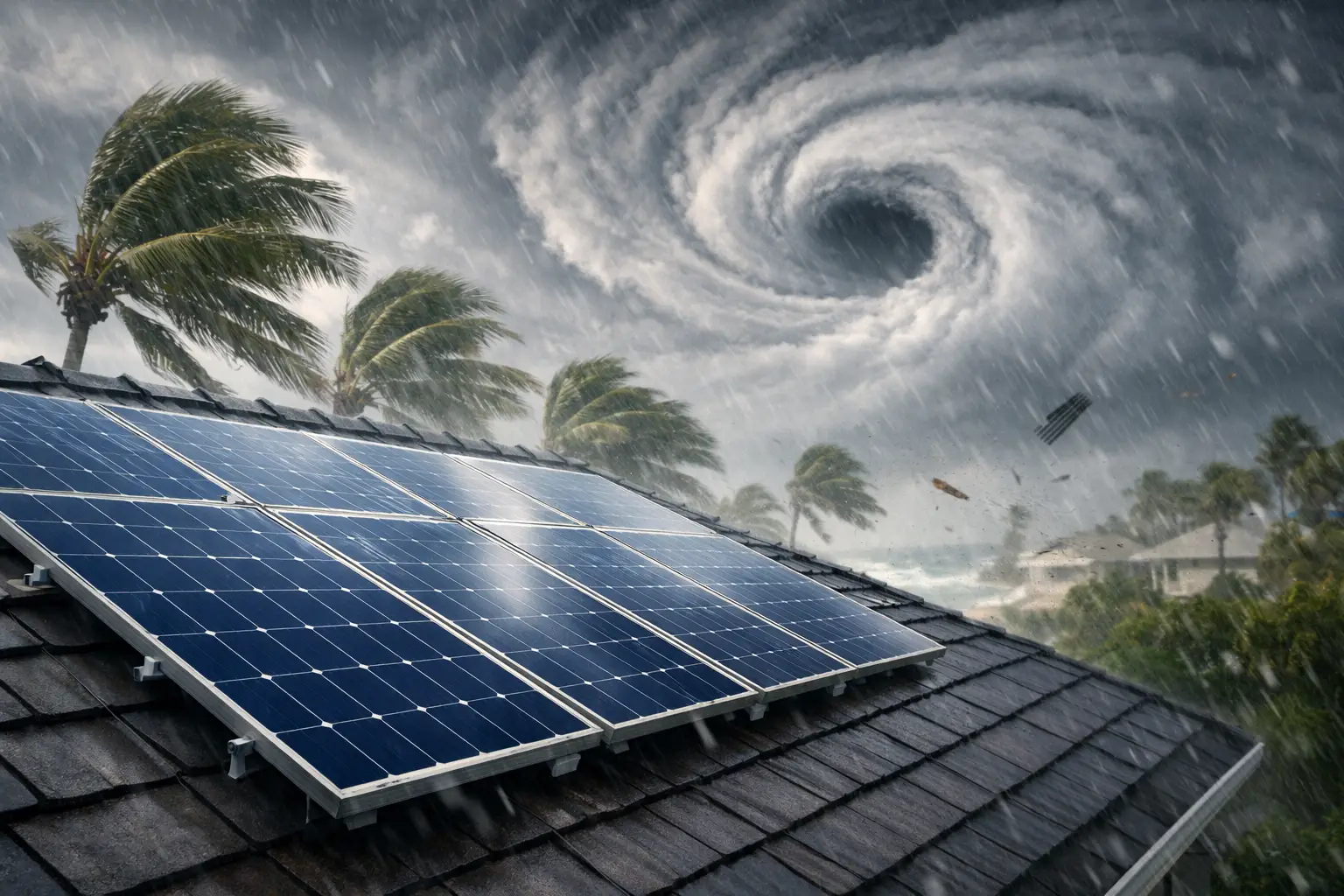
A hurricane warning changes how South Florida property owners look at every part of a building, from the roof and windows to electrical equipment. So, can solar panels survive hurricanes? Yes. A properly designed, permitted, and professionally installed solar system is built to handle the high-wind conditions expected in our region. The result depends on more than the panels themselves: roof condition, mounting design, attachment points, electrical work, and code compliance all matter.
For homeowners and commercial property owners, solar should be an asset that supports long-term energy savings without compromising storm readiness. That starts with treating hurricane resistance as part of the installation from day one, not as an afterthought.
Can Solar Panels Survive Hurricanes? What Makes the Difference
Solar panels are manufactured with durable frames and tempered glass designed for outdoor exposure. They routinely handle hard rain, heat, humidity, and wind-driven debris. But a panel does not protect a property by itself. The entire system must work together.
The mounting system is the foundation of hurricane performance. Panels are secured to rails, and those rails are attached to the roof structure through engineered mounting points. When these connections are correctly located, sealed, and installed for the property’s wind requirements, they help distribute wind forces across the system instead of concentrating pressure in one weak area.
The roof matters just as much. A sound roof gives the solar mounting system the support it needs. If a roof is approaching the end of its service life or has existing damage, addressing that condition before installing or reinstalling solar protects both the roof and the investment above it. For properties planning a roof replacement, solar panel removal and reinstallation should be completed by a qualified solar contractor who understands the electrical system, mounting hardware, and permit requirements.
Wind is not the only concern during a storm. Flying debris can affect almost any exterior feature, including solar equipment. Quality panels are built to withstand demanding weather conditions, but no rooftop component can promise zero damage in every possible impact event. The practical goal is a system designed to meet local requirements, installed with discipline, and inspected after severe weather.
Hurricane-Ready Solar Starts With Proper Design
South Florida is not a place for one-size-fits-all solar layouts. A system should be designed around the specific roof, building structure, available space, and local code requirements. That approach protects performance and helps ensure the project moves through inspections and final approval correctly.
A professional design considers roof orientation and panel placement, but it also evaluates the structural attachment plan. The installer must use the appropriate mounting components and fastening methods for the roof type. Penetrations must be properly flashed and sealed to maintain roof integrity. Electrical components, conduit, disconnects, and wiring must also be secured and installed to code.
This is why permits are more than paperwork. They document that the project has a defined scope and is being completed to the standards required for the property. When an older installation has an open or expired permit, incomplete work, or an electrical issue that needs correction, the situation can be resolved. A licensed contractor can diagnose the system, complete the necessary work, coordinate with the municipality, and bring the project through final approval.
For commercial properties, this level of planning is especially valuable. Facility managers need energy infrastructure that supports operations without creating avoidable maintenance issues. A properly executed system provides a cleaner path for property records, ongoing service, roof work, and future upgrades.
The Roof and Mounting System Carry the Load
Many people focus on the glass surface of a solar panel, but the system underneath is where hurricane readiness is proven. The rails, clamps, roof attachments, flashing, and structural connections must be installed as a complete assembly.
High winds create uplift. In simple terms, air moving over and around a roof can pull upward on rooftop equipment. Solar mounting systems are designed to resist that force when the components are correctly specified and attached. Spacing, rail layout, edge zones of the roof, and the number and placement of attachments all influence the final design.
A well-executed installation also protects against water intrusion. Roof penetrations need professional flashing and sealing because a solar system should not create weak points in the roof. When a property already has roof concerns, a roofing assessment before solar work can identify the right path forward.
This is also why homeowners should avoid treating a solar array as a simple add-on. It is a long-term building improvement connected to the roof and electrical system. Professional installation gives the property a coordinated solution instead of separate pieces that do not account for one another.
What to Do Before Hurricane Season
Once a solar system is installed, preparation is straightforward. There is generally no need to remove panels when a storm approaches. Removing a properly installed array can create unnecessary risk, disrupt electrical connections, and leave the roof exposed.
Instead, keep the roof and surrounding area in good condition. Trim trees and remove loose outdoor objects that could become wind-borne debris. If you notice loose conduit, exposed wiring, damaged roof materials, unusual inverter alerts, or movement in mounting hardware, schedule service before storm season reaches its peak.
If your system includes battery backup, make sure you understand its normal operating status and the equipment’s shutdown procedures. Battery backup can help support selected household or business loads during an outage, depending on the system design. It should be installed and serviced as part of a coordinated electrical plan, not treated as a separate appliance.
Property owners with older systems can also benefit from a professional system check. Inverter replacement, panel additions, service corrections, and equipment upgrades are opportunities to confirm that the system is operating as intended and that the installation remains properly documented.
After a Hurricane: A Safe, Practical Inspection Plan
After the storm passes, begin with a visual inspection from the ground. Look for visible panel damage, displaced rails, loose wiring, roof damage around the array, or debris resting on the panels. Do not climb onto the roof or attempt to adjust electrical equipment yourself, especially if there is standing water, damaged wiring, or a downed utility line nearby.
If the system appears intact, check the inverter or monitoring platform once power conditions are stable. A temporary production interruption can happen after grid outages, and many systems are designed to shut down during an outage for safety. That does not automatically mean the solar system is damaged.
Call for professional service if you see physical damage, receive persistent fault messages, notice water intrusion, or have concerns about system performance after utility service returns. A trained technician can inspect the array, mounting components, inverter, wiring, and roof interface, then make repairs or provide the documentation needed for the next step.
For properties with unresolved permit records or incomplete solar work from a prior project, post-storm service can be a practical time to bring the entire system into order. The goal is clear: correct the issue, restore safe operation, and close out the necessary municipal requirements.
Solar Protection Works Best as Part of a Whole-Property Plan
Solar panels can be part of a stronger, more efficient South Florida property when they are paired with thoughtful storm protection and building maintenance. A solid roof, properly installed impact windows and doors, secure electrical equipment, and a code-compliant solar system each address a different part of the property’s resilience.
That does not mean every property needs the same upgrades at the same time. The right plan depends on the building’s current condition, energy goals, roof timeline, and backup-power needs. What matters is working from a clear assessment and completing each improvement correctly.
Solar Construction LLC helps property owners across Miami-Dade, Broward, and Palm Beach counties install, service, upgrade, remove, reinstall, and resolve solar systems with accountability from the first assessment through final approval. When hurricane season is part of life, professional execution is what turns solar into a dependable part of your property.