
Why Solar Panel Maintenance Service Matters

A solar system can look fine from the ground and still underperform where it counts. A little debris, a loose connection, a failing inverter, or storm-related wear can quietly reduce production long before there is an obvious problem. That is why solar panel maintenance service matters. It protects energy output, catches issues early, and keeps the system working the way it was designed to work.
For property owners in South Florida, that matters even more. Heat, humidity, salt air, heavy rain, and hurricane-season weather put real stress on rooftop equipment. Solar is built for outdoor conditions, but that does not mean it should be ignored. Like any major building system, it performs best when it is inspected by professionals who know what to look for and how local conditions affect long-term reliability.
What a solar panel maintenance service actually does
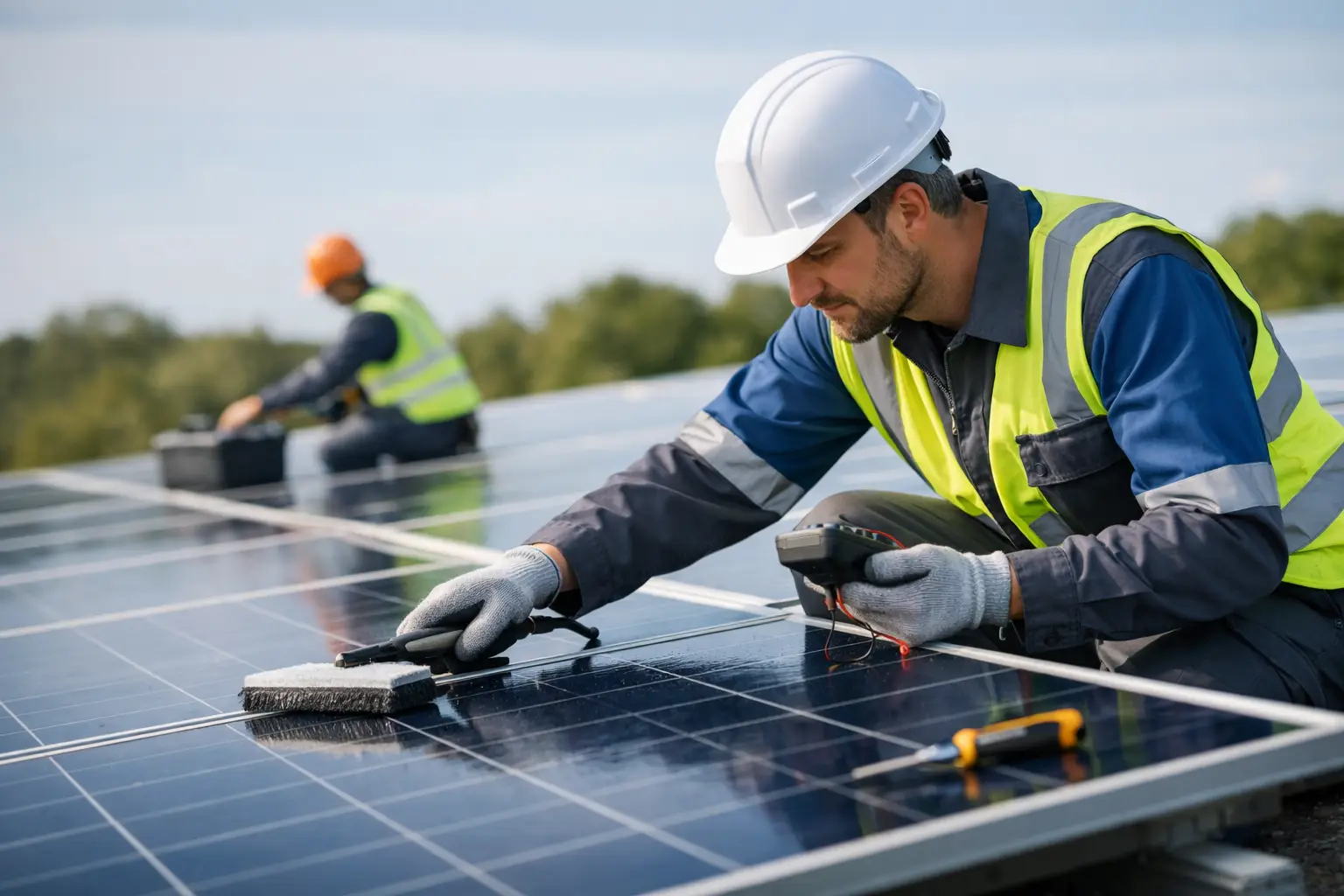
A professional solar panel maintenance service is not just a basic cleaning visit. The real value is in evaluating the system as a whole. Panels, wiring, mounting hardware, inverter performance, shutdown components, and visible signs of wear all need to be reviewed together.
A good service call starts with system performance. If production has dipped, the cause is not always obvious. Dirt buildup may be part of it, but electrical faults, shading changes, microcracks, corrosion, and aging components can also play a role. Maintenance helps separate a simple fix from a deeper issue before lost production keeps adding up.
There is also the safety side. Solar equipment is tied directly into your property’s electrical system. If there are damaged connectors, compromised conduit, water intrusion, or mounting concerns after severe weather, those issues need attention from an experienced team. Waiting too long can turn a manageable repair into a larger service problem.
Signs you may need solar panel maintenance service
Sometimes the need is obvious. Sometimes it is not. If your monitoring shows a drop in output, your inverter is displaying alerts, or your utility savings no longer look consistent, it is time to have the system checked.
There are also physical signs that should not be ignored. Leaves and grime collecting along panel edges, visible staining, loose hardware, pest activity under the array, or signs of roof work near the system can all justify maintenance. After a major storm, an inspection is a smart move even if the system appears intact.
Commercial properties often face a different challenge. The system may still be running, but small performance losses across a larger array can have a much bigger impact over time. Regular maintenance helps facility managers stay ahead of that drift instead of finding out months later that one section of the system has not been producing properly.
What gets checked during maintenance
The exact scope depends on the system, its age, and any issues already showing up in performance data. Still, the core purpose stays the same: confirm that the system is producing properly, operating safely, and physically secure.
Panels are checked for surface buildup, visible damage, and anything blocking sunlight. The mounting system is reviewed for secure attachment and signs of wear. Wiring and electrical connections are inspected for deterioration, corrosion, or weather-related damage. Inverter operation is evaluated because that component often tells the clearest story about overall system health.
If the property has battery backup, that equipment should be reviewed as part of the same visit. Storage systems add another layer of value, but they also add another set of components that need to function correctly during outages and daily use. The same goes for systems that have been expanded over time. When panels are added later, maintenance helps confirm the full system is working together as intended.
Cleaning matters, but it is not the whole job
Many people think maintenance means washing the panels and moving on. Cleaning does matter, especially in areas where salt, dust, pollen, and bird activity can affect performance. But cleaning alone does not reveal whether a connector is degrading, a breaker is showing trouble, or a mounting point needs attention.
That is where professional service stands apart from a surface-level approach. A clean array that has an electrical issue is still an underperforming array. The goal is not just to make the panels look better. The goal is to protect output and system reliability.
It also depends on the site. Some properties stay relatively clean because of regular rainfall and roof angle. Others collect residue faster because of nearby trees, construction dust, coastal exposure, or environmental conditions unique to the building. Maintenance should match the property, not a generic schedule.
Why local experience makes a difference
Solar systems do not exist in a vacuum. They are installed on real buildings, under real codes, in real weather conditions. In South Florida, maintenance is shaped by factors that contractors in milder regions do not deal with the same way. Hurricane-rated mounting, municipal requirements, salt exposure, roof conditions, and utility interconnection standards all influence what should be inspected and how problems should be resolved.
That is why experience matters when a system has more than one issue going on at once. A maintenance visit may uncover an inverter problem, evidence of prior incomplete work, permit complications, or code-related corrections that need to be addressed before the system can perform properly again. This is where a company with actual problem-resolution experience brings more value than a team that only handles simple service calls.
Solar Construction LLC has spent nine years working through South Florida solar realities, including the difficult cases other contractors leave behind. That matters for routine maintenance, but it matters even more when a maintenance visit reveals something bigger that needs to be fixed correctly.
Maintenance protects more than energy production
The most obvious reason to schedule service is performance, but that is only part of the picture. Maintenance also helps protect the roof, the electrical system, and the long-term value of the investment.
If panels need to be removed and reinstalled for roof work, coordination becomes critical. If an older inverter is starting to fail, replacing it before full downtime helps avoid a longer interruption. If an addition is planned to increase system capacity, maintenance gives a clear baseline before expansion begins. These are practical property decisions, not abstract technical concerns.
For homeowners, that means fewer surprises and more confidence that the system is supporting the home the way it should. For commercial property owners and facility managers, it means less risk of unnoticed production loss and more control over building operations.
How often should service happen?
There is no universal rule that fits every property. Some systems need relatively light attention. Others benefit from more regular checks because of tree cover, coastal conditions, storm exposure, system age, or prior performance issues.
What matters most is not picking an arbitrary timeline. It is responding to the system’s environment and history. A newer array on a clean, unobstructed roof may need less hands-on service than an older system exposed to salt air and frequent debris. If the property has gone through storms, roof work, or inverter alerts, waiting for obvious failure is rarely the best move.
The right maintenance rhythm is based on how the system is actually performing and what conditions it faces year after year. That is a more dependable approach than assuming all systems age and operate the same way.
The best time to act is before output drops further
Solar is one of the most dependable upgrades a property can have, but dependable does not mean self-managing forever. Systems perform best when small issues are caught early, service is handled by people who understand the full electrical and structural picture, and maintenance is treated as part of protecting the asset.
If your system has gone through storms, your production is slipping, or you simply want to make sure everything is operating the way it should, professional maintenance is a smart next step. The strongest solar systems are not the ones left alone the longest. They are the ones that get the right attention before small problems have a chance to grow.