
How to Reconnect a Solar System After Shutdown

A solar system that has been turned off for a roof project, electrical service, storm preparation, or equipment work should not stay idle longer than necessary. Knowing how to reconnect solar system components correctly helps protect your equipment, restore energy production, and keep your property operating as planned. The key is simple: follow the system’s documented restart sequence, confirm that the utility connection is active, and never force a reset when an inverter shows an alert.
For most South Florida properties, reconnecting solar is straightforward when the shutdown was planned and the equipment is in good condition. When there is an unresolved permit, an electrical correction, storm damage, a roof replacement, or an inverter fault, professional service is the right path to a safe, approved restart.
When a Solar System Needs Reconnection
Solar systems are intentionally shut down for several normal reasons. A roofing crew may need panels removed and reinstalled before completing a new roof. An electrician may turn off solar equipment during an upgrade. A utility outage can also cause the inverter to stop producing power automatically, even if your home still has electricity after service is restored.
A system may also remain disconnected after technical service, inverter replacement, battery backup installation, panel additions, or municipal permit resolution. In each case, the goal is not merely to turn equipment back on. It is to return the full system to safe operation, with the panels, inverter, breakers, disconnects, and monitoring working together.
If your system was shut down by a qualified technician and you were given restart instructions, use those instructions first. Equipment layouts and manufacturer sequences vary. The labels at your property and the instructions supplied with your system take priority over a general online guide.
Check the System Before You Turn It Back On
Before reconnecting anything, take a few minutes to confirm that the reason for the shutdown has been fully addressed. If solar panels were removed for roofing work, verify that reinstallation is complete and that all visible equipment is secure. If electrical repairs were performed, confirm the electrician has finished the work and approved the restart.
Look for obvious conditions that require service instead of a reset. These include loose conduit, damaged wiring, water around electrical equipment, a cracked inverter enclosure, a burning smell, or an error message that does not clear. Do not open electrical panels, remove inverter covers, or handle damaged components. Solar equipment combines utility power with DC electricity generated by the panels, and both require proper handling.
You should also confirm that the utility service is active. During a grid outage, standard solar systems shut down automatically to protect utility workers. They will not resume normal production until grid power has returned and the inverter completes its required safety checks. A battery backup system may keep selected circuits powered during an outage, but its operating mode depends on the equipment design and settings.
How to Reconnect a Solar System in the Right Order
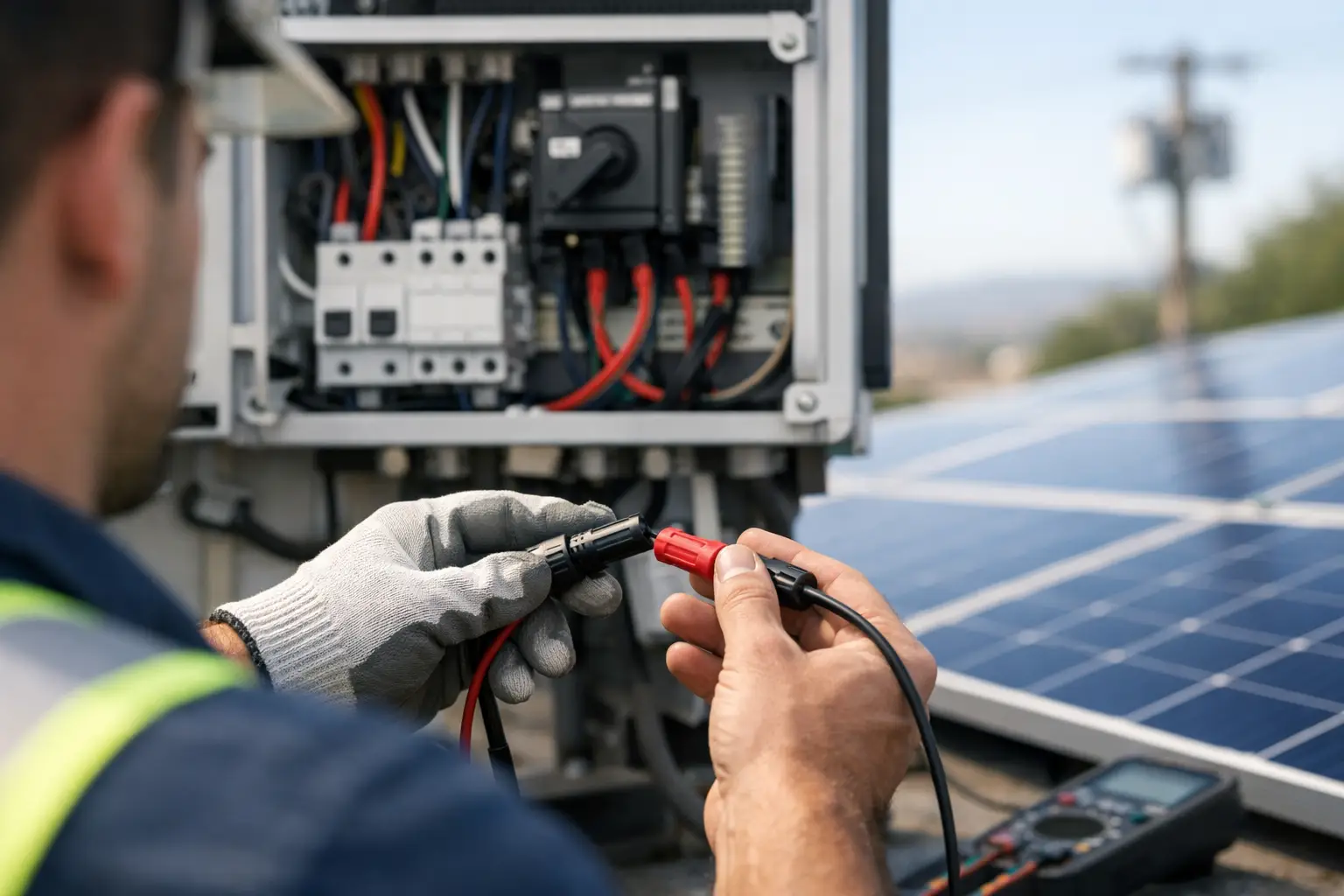
A planned restart usually involves restoring the utility-side connection first, then the solar-side connection, and finally allowing the inverter to initialize. Your equipment may use labeled breakers, disconnect switches, or a combination of both.
Start by making sure the main electrical service is on. Next, turn on the solar AC breaker or AC disconnect if it was turned off during service. Then restore the solar DC disconnect only if your system has one and it is clearly labeled for normal operation. Some newer systems have different configurations, so do not assume every system includes the same switches.
Once the power path is restored, the inverter should begin its startup process. It may take several minutes before production appears. This wait is normal. The inverter checks voltage, frequency, and utility conditions before it begins sending solar energy to your home’s electrical system.
Avoid turning switches on and off repeatedly if production does not appear immediately. Repeated cycling does not speed up the process and can make it harder to identify a real equipment issue. Give the inverter time to complete its check, then review the display or monitoring app for its operating status.
What Normal Startup Looks Like
A successful restart often follows a predictable pattern. The inverter powers up, displays a standby or checking status, and then changes to a producing, operating, or similar normal status. Your monitoring platform may take longer to update than the inverter itself, especially after an outage or an internet interruption.
Production also depends on daylight. If you reconnect the system in the evening, the inverter may show that it is connected but will not produce meaningful energy until sunlight is available. Checking the system during daytime gives you the clearest confirmation that it has returned to service.
What to Do if the Inverter Shows an Alert
An alert does not always mean there is major damage. It may indicate that the inverter is waiting for stable grid conditions, has lost its internet connection, or needs a technician to clear a service-related setting. Still, an active fault code deserves a proper response.
Write down the exact message on the inverter screen or take a clear photo. Check whether the solar breaker and disconnects are in their normal labeled positions. Then stop there. Do not bypass a disconnect, reset an electrical panel repeatedly, or attempt to work inside the inverter.
Professional diagnosis is especially valuable after storm exposure, roof work, electrical upgrades, or a long period of shutdown. A technician can verify the system output, inspect connections, confirm inverter communication, and correct the issue without putting your property or equipment at risk.
Reconnecting Solar After a Roof Project
Roof replacement is one of the most common reasons a solar system is disconnected. The panels must be removed before roofing begins and reinstalled once the roof is ready. This work should include more than placing panels back where they were.
The mounting system must be properly sealed, wiring must be secured, and every solar component must be reconnected according to the system design. After reinstallation, the system should be tested for production and proper operation. If permits or inspections are involved, the final process should also support city approval and a clean project record.
For homeowners and commercial property managers, this is where coordinated service matters. A roof project, solar reinstallation, electrical work, and permit closeout should move forward as one organized plan rather than separate problems. Solar Construction LLC provides solar removal and reinstallation, technical service, roofing assessments, and permit resolution support for properties across Miami-Dade, Broward, and Palm Beach counties.
Permits and Utility Approval Still Matter
If your solar system was disconnected because of an open permit, expired permit, code correction, or incomplete installation, restarting it should be part of a complete resolution process. The equipment may look ready, but the project still needs the right documentation, corrections, and final approval where required.
These situations are solvable. A licensed solar contractor can assess the existing system, identify what the municipality requires, complete the necessary corrections, coordinate inspections, and return the system to approved operation. This approach protects the value of your solar investment and gives you a clear path forward instead of leaving an unresolved record attached to the property.
The same principle applies to commercial facilities. A disconnected solar system can affect energy planning, maintenance schedules, and building operations. A structured service response keeps the work focused on restoring performance while meeting applicable electrical and municipal requirements.
When to Call for Professional Solar Service
Homeowners can safely confirm visible labels and follow documented restart instructions after a routine shutdown. Beyond that, licensed service is the right move when the system will not start, the inverter reports a fault, equipment has been exposed to damage, or a roof or electrical project has changed the system.
Call for support if you notice damaged wiring or equipment, repeated inverter alerts, no production during clear daytime conditions, missing monitoring data after the system has had time to restart, or any open permit or compliance issue. These are not reasons to lose momentum. They are clear service items that can be diagnosed and resolved.
A solar system is built to deliver long-term value, but it needs a correct reconnection after any interruption. Restore power in the documented sequence, give the inverter time to verify the grid, and bring in qualified support whenever the restart does not proceed normally. That is how you protect the equipment, return to production, and keep your property moving forward.