

A Solar Violation Resolution Example That Closes Permits

A solar violation resolution example is most useful when it shows what actually moves a property from an unresolved municipal record to an approved, closed permit. For a South Florida homeowner or commercial property owner, the issue may appear as an old solar permit, a failed inspection, missing electrical documentation, or work that was never finalized. The path forward is not guesswork. It is a structured process led by a licensed contractor who can identify the condition of the system, complete required corrections, coordinate with the local jurisdiction, and bring the project to final approval.
A Common Solar Violation Resolution Example
Consider a homeowner who purchased a property with solar panels already installed. The system may be producing energy, but a title search, municipal notice, refinance review, roof project, or property sale reveals an open solar permit. The permit was issued years earlier, yet the final inspection was never completed. In some cases, the original installer is no longer available. In others, the system was altered after installation, or the inspection record shows corrections that were never addressed.
The homeowner now has an active property issue that needs a professional resolution. The goal is straightforward: determine why the permit remains open, correct any code or documentation items, pass inspection, and close the record with the city or county.
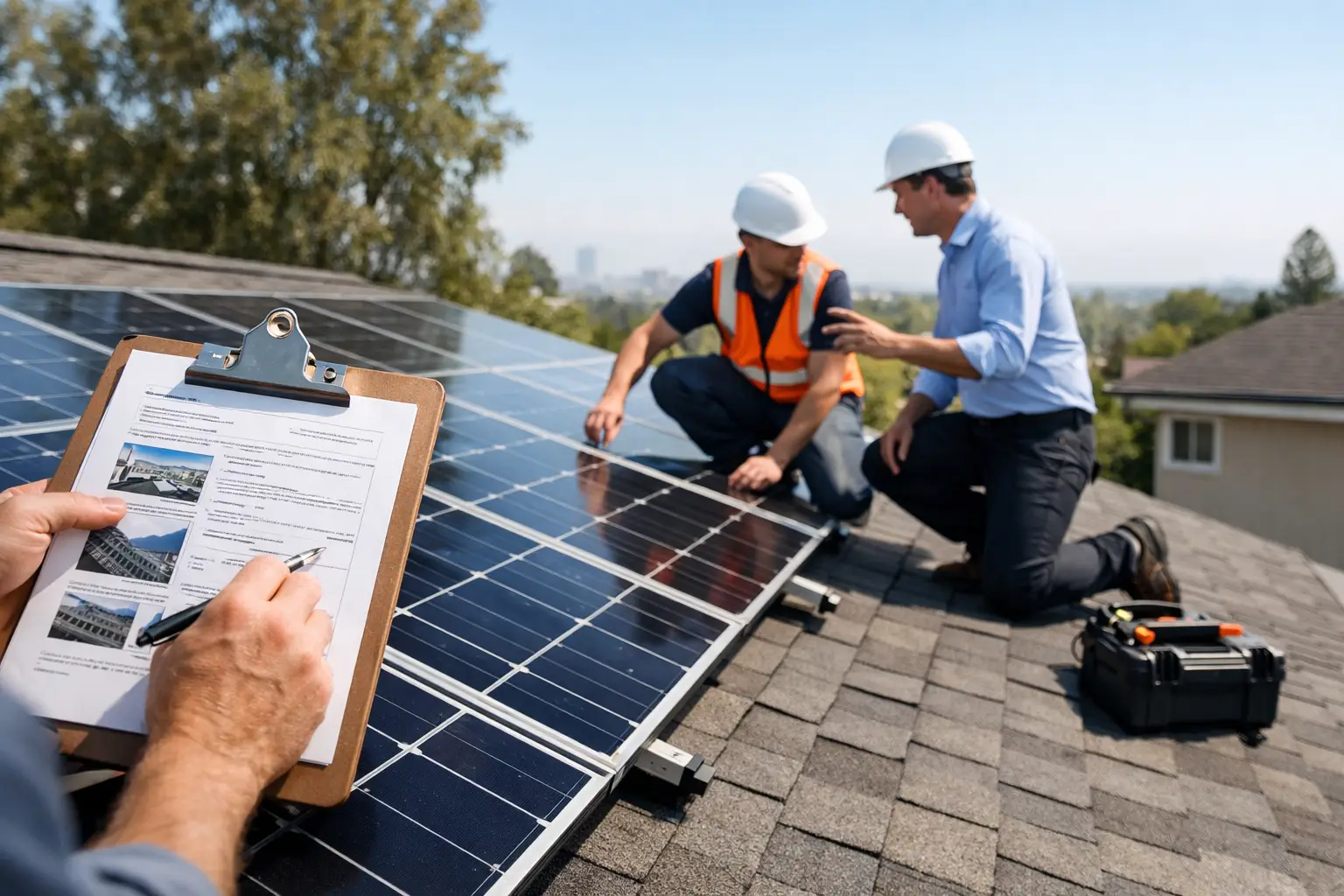
The first step is a site assessment. A licensed solar contractor reviews the installed panels, mounting equipment, wiring, inverter, disconnects, labels, grounding, and accessible electrical components. This review establishes whether the work is complete, whether the system matches available permit documents, and what the municipality will likely require before scheduling a final inspection.
This matters because an open permit is not resolved by simply requesting an inspection. If a required label is missing, a disconnect is inaccessible, an electrical component needs correction, or documentation does not reflect the existing installation, those items should be handled before the inspector arrives. Proper preparation protects the property owner from repeated inspection delays and keeps the process moving.
What the Resolution Process Looks Like
Once the site condition is documented, the contractor confirms the permit status with the appropriate local building department. Requirements vary by jurisdiction and by the age and condition of the original permit. An expired permit may need to be reinstated. An open permit may require updated forms, a new contractor of record, or confirmation that prior corrections have been completed.
For the homeowner in this example, the site review identifies a few manageable issues: faded safety labels, an electrical correction needed near the service equipment, and incomplete records related to the system’s final approval. The contractor creates a resolution plan based on the municipal file and the current condition of the installation.
The corrective work is then completed by qualified personnel. This can include repairing or replacing approved electrical components, updating required labeling, securing equipment, addressing roof penetration details when needed, and bringing the visible installation into alignment with applicable permit requirements. If the system needs technical service at the same time, such as inverter replacement or fault correction, that work can be coordinated as part of the overall property solution.
After corrections are complete, the contractor prepares the required paperwork and coordinates the inspection. The owner should not have to interpret municipal comments alone or chase multiple parties for updates. A well-managed resolution includes clear communication about the next milestone, whether that is submitting documents, completing a repair, obtaining utility-related confirmation, or scheduling the final building inspection.
When the inspector approves the work, the jurisdiction records the final approval and closes the permit. The property owner then has a clearer municipal record, which can support future roofing work, refinancing, a sale, or other improvements.
Why Open Solar Permits Need a Direct Response
An unresolved solar permit can stay attached to a property record long after the original installation. It may not cause a daily problem, but it can become urgent when the owner needs to move forward with a transaction or construction project. A buyer, lender, roofer, property manager, or municipal reviewer may request proof that the solar installation was properly finalized.
The right response is to address the issue early with a contractor equipped to take responsibility for the resolution. That means more than providing a general opinion about the panels. It means inspecting the actual work, identifying what the jurisdiction needs, making repairs when required, and following the matter through final approval.
For commercial properties, the same principle applies, often with more coordination. A facility manager may discover an open permit during a building upgrade, insurance review, tenant improvement, or roof replacement. The resolution plan must account for site access, electrical safety, business operations, and municipal scheduling while keeping the property moving toward compliance. The work should be organized around practical execution, not unnecessary disruption.
Resolution Depends on the Property and Permit Record
No two solar permit issues are identical. Some properties need only documentation updates and a final inspection. Others require physical corrections before an inspector can sign off. The condition of the solar equipment, the age of the permit, changes made to the property, and the requirements of the local authority all influence the scope of work.
A system installed on a property that now needs a new roof may require another layer of planning. Panels may need to be removed and reinstalled correctly so the roofing project and solar permit requirements are addressed together. Likewise, a property with an outdated inverter or electrical concern may benefit from resolving the technical issue while completing the permit closeout. Coordinating these needs through one experienced provider reduces handoffs and keeps accountability clear.
That does not mean every open permit requires major work. In many cases, the installation can be evaluated, corrected where necessary, and brought to final inspection efficiently. What matters is having a licensed contractor assess the facts before defining the path to closure.
What Property Owners Can Expect During Resolution
A professional solar violation resolution should give the owner visibility without placing the administrative burden on them. The process begins with an inspection and review of available permit information. From there, the contractor explains the required work in plain language, performs the approved corrections, manages applicable documentation, and coordinates the final inspection process.
Owners should also expect an honest assessment of conditions that affect timing. Municipal inspection calendars, missing historic records, permit reinstatement steps, and the need for repairs can influence the schedule. Clear updates matter because they allow homeowners and commercial decision-makers to plan around a roof project, closing date, tenant schedule, or other property priority.
Solar Construction LLC handles this process from diagnosis through final city approval for properties throughout Miami-Dade, Broward, and Palm Beach counties. With licensed solar expertise, the team can address open permits, expired permits, code corrections, incomplete installations, and solar system service needs with one clear objective: get the property record moving forward.
Turn an Open Record Into a Completed Project
A solar violation does not have to remain a lingering property issue. The practical solution is to identify the exact reason the permit is still open, correct what the municipality requires, and complete the inspection process with a licensed contractor managing the details. Whether the concern surfaced during a sale, a roof replacement, a municipal notice, or a routine property review, decisive action creates a cleaner path ahead.
A completed permit is more than paperwork. It is confirmation that the solar project has been addressed professionally and that the property is ready for its next step.