

Common Solar Electrical Code Violations

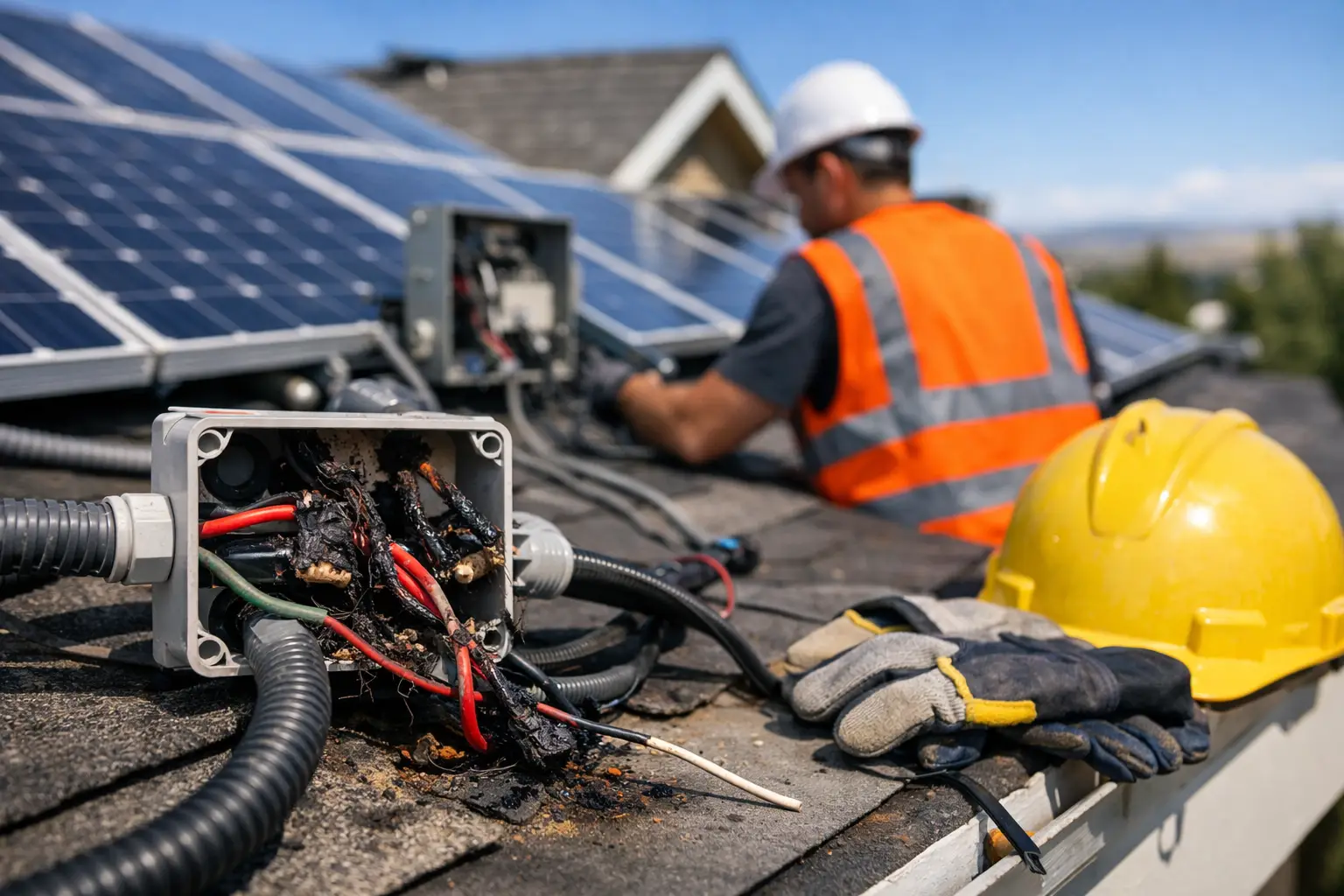
A failed inspection usually does not start with the solar panels. It starts at the small details most property owners never see – conductor sizing, labeling, grounding, breaker placement, or equipment that was installed without matching the approved plans. That is why solar electrical code violations can stall a project, trigger municipal notices, and leave a system producing headaches instead of power.
For homeowners and commercial property managers, the issue is not just technical compliance. It is whether the system is safe, insurable, and able to stay in service without permit problems hanging over the property. In South Florida, where weather exposure, utility coordination, and local permitting standards all matter, code issues need to be handled with precision.
Why solar electrical code violations happen
Most violations happen for one of three reasons. The first is poor installation work. A system may look complete from the ground while hidden components fail basic code requirements at the inverter, disconnect, combiner, meter, or service equipment.
The second is a change made after permit approval. Installers sometimes swap equipment, reroute conduit, combine circuits differently, or relocate components in the field. Even when the change seems minor, it can create a mismatch between the approved plans and the actual installation. Inspectors notice that quickly.
The third is unfinished or inherited work. This is common when a prior contractor disappears, stops responding, or leaves an open permit behind. In those cases, the property owner is often left with a partially functional system and a code compliance problem that has to be cleaned up before anything can move forward.
The most common solar electrical code violations
Some violations are relatively simple to correct. Others point to deeper installation problems. The only way to know the difference is to inspect the full system, not just the item written on the correction notice.
Improper labeling and missing placards
Solar systems require specific labels at key points, including disconnects, service equipment, rapid shutdown devices, and power sources. Missing, faded, or incorrect placards are one of the most common violations because they are easy for inspectors to spot and easy for careless installers to overlook.
This is not cosmetic. Labels help first responders and service technicians identify energized equipment quickly. In an emergency, clear system identification matters.
Incorrect breaker sizing and load-side connections
Backfed breakers, busbar calculations, and panelboard limitations have to be handled correctly. If the solar breaker is oversized, placed in the wrong location, or added to a panel that cannot legally accept the extra load, the violation becomes a real safety concern.
This issue comes up often on older properties where the electrical service was never designed for solar interconnection. Sometimes the fix is straightforward. Sometimes the service equipment needs to be reworked to bring the system into compliance.
Grounding and bonding errors
Grounding and bonding problems can show up at module rails, inverters, disconnects, and service equipment. Loose bonding jumpers, incompatible connectors, or missing grounding paths can all create violations.
These mistakes are serious because they affect fault protection and system safety. In a coastal environment with heat, moisture, and corrosion exposure, shortcuts in grounding work do not stay small for long.
Conductor and conduit issues
Inspectors regularly cite systems for unsupported conduit, exposed wiring, improper conductor type, incorrect wire sizing, or routing that does not match code requirements. Outdoor solar equipment is exposed to sun, rain, and wind, so cable management and protection are not optional details.
A wire run that is technically functional may still fail inspection if it lacks proper support, enters equipment incorrectly, or uses materials not approved for the application. That is where experience matters. Electrical work has to satisfy both performance and code.
Rapid shutdown noncompliance
Rapid shutdown requirements are designed to reduce shock hazards by limiting voltage in conductors outside the array boundary. If the system lacks the required equipment, has incompatible components, or is not labeled and configured properly, it may not pass inspection.
This is an area where older systems and modified systems often run into trouble. If equipment was added later or replaced without considering current code requirements, the result can be a system that works but is no longer compliant.
Disconnect and equipment clearance problems
Solar disconnects, inverters, batteries, and related equipment must be installed with proper working clearances and in approved locations. If equipment is blocked, mounted too close to other building elements, or placed where code does not allow it, the installation may need to be adjusted.
This can be frustrating because the equipment may already be mounted, wired, and operating. Still, if service access and code clearance rules are not met, relocation may be necessary.
What these violations can mean for a property owner
A code violation does not always mean the system is dangerous in every moment, but it does mean something important was not handled correctly. That can affect more than the inspection itself.
An open violation can delay final permit approval, hold up utility signoff, complicate property transactions, and create insurance concerns. For commercial properties, it can also affect operations planning if the energy system is part of a larger facility strategy. For homeowners, the stress usually comes from not knowing whether the system can remain active, whether the municipality will escalate the issue, or whether anyone is willing to take responsibility for fixing it.
That last point matters. A lot of contractors are willing to install a clean, simple system. Far fewer are willing to step into a troubled project, review what was done, correct the electrical work, and close the permit properly. That is exactly where a solution-focused contractor proves its value.
How solar electrical code violations are fixed correctly
The right fix starts with documentation and field verification. Correction notices, approved plans, equipment specifications, prior inspection records, and actual site conditions all need to be reviewed together. Without that, it is easy to fix the obvious issue and miss the underlying one.
Match the installation to code and approved plans
Sometimes the cleanest path is to revise the work to match the permitted design. Other times, the field conditions make more sense than the original drawings, and the plans need to be updated to reflect the installed equipment. It depends on what was approved, what is physically present, and what local authorities require.
The goal is not to patch a single issue. The goal is to bring the system into a condition that can pass inspection and stay compliant.
Correct workmanship issues at the source
If the violation involves grounding, conductor protection, breaker configuration, rapid shutdown, or disconnect placement, the repair should address the root cause. That may mean replacing equipment, rerouting wiring, reterminating conductors, adding required labels, or reworking interconnection points.
Shortcuts tend to create repeat failures. Clean corrective work saves time because it reduces the chance of another rejection.
Coordinate permit closure and reinspection
Electrical corrections are only part of the process. The paperwork side matters too. Municipal records, permit status, and inspection scheduling all have to be handled in step with the field repairs.
That is why unresolved solar issues often drag on. The technical fix and the administrative fix have to move together. When they do, properties get back to a clear status faster.
When the issue involves an older or incomplete system
Not every violation comes from a brand-new installation. Some show up years later when a property owner tries to sell, refinance, replace a roof, upgrade equipment, or add battery backup. Others surface when an old open permit is discovered and the municipality requires corrections before the record can be closed.
In those cases, the best approach is usually practical rather than theoretical. Keep what is compliant and performing well. Repair or replace what is not. If parts of the system were installed under older standards, the solution may depend on whether the work is being altered, expanded, or re-permitted. That gray area is exactly why experienced permit and code management matters.
For properties in South Florida, there is another layer to consider: hurricane exposure, salt air, and roof integration all put pressure on electrical workmanship over time. A system that looked acceptable years ago may now show wear, corrosion, or mounting-related issues that affect compliance. Good corrective work accounts for current condition, not just original intent.
Why experience matters with code violations
Solar code work is not just about knowing electrical theory. It is about understanding how local inspection departments interpret requirements, how utilities handle interconnection details, and how to move a problem project toward closure without creating new issues. That is one reason Solar Construction LLC is often called when other contractors have already walked away from the file.
For property owners, the benefit is straightforward. You want a contractor who can identify the problem, explain it clearly, perform the correction properly, and stay accountable through inspection and permit resolution. That is what turns a lingering violation into a finished job.
If your solar system has an open permit, failed inspection, or unresolved electrical issue, the right next step is not guesswork. It is a full review of what was installed, what was approved, and what needs to happen to close the case the right way. A code problem is manageable when the work is handled with accuracy, urgency, and follow-through.