

Home Solar Planning for South Florida Properties

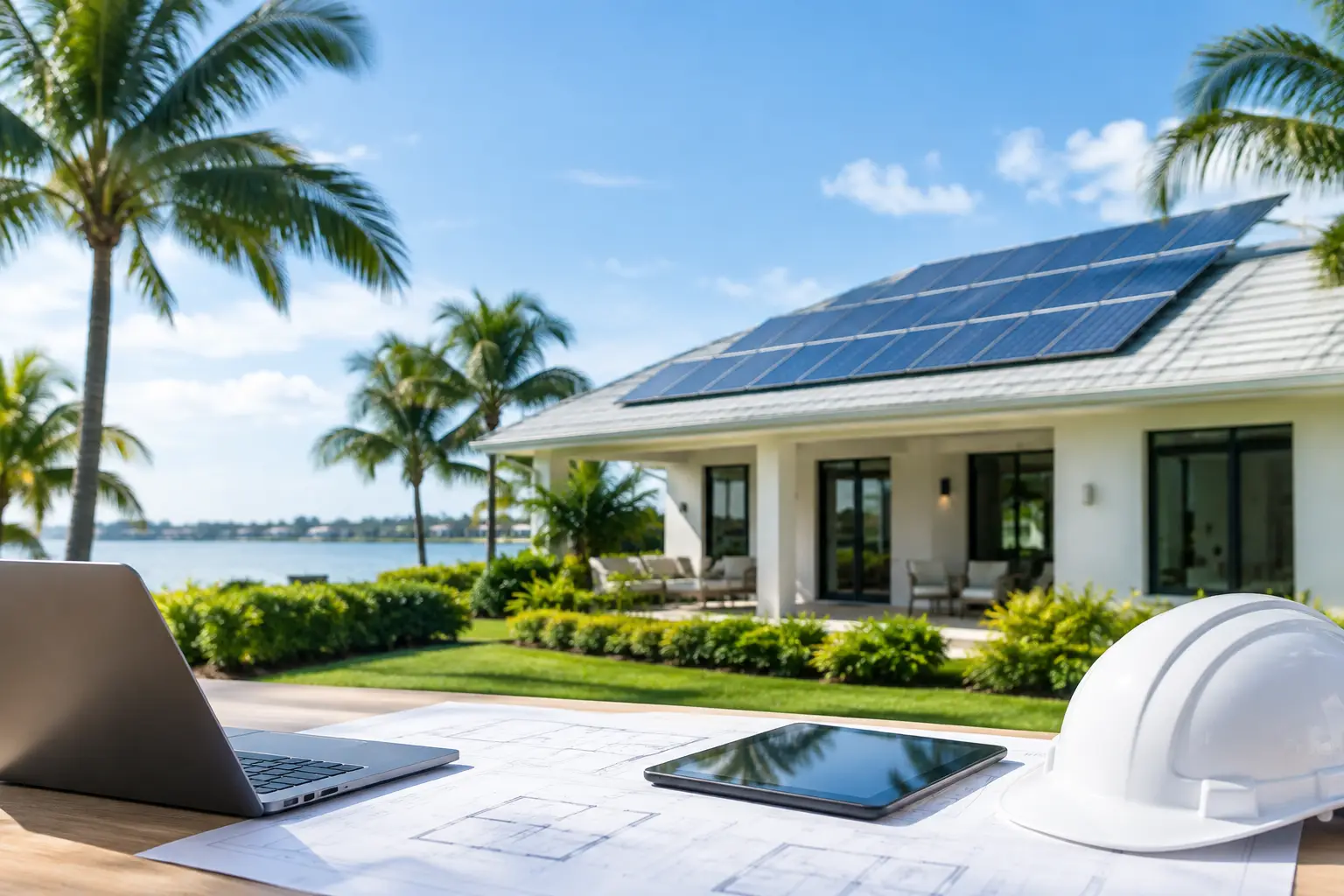
A solar project should begin well before panels reach the roof. The strongest results come from home solar planning that connects your property’s condition, energy use, resilience goals, and permitting requirements into one clear plan. For South Florida homeowners, that planning also needs to account for intense sun, storm exposure, roof readiness, and local approval requirements.
Solar is a property upgrade with long-term impact. When it is designed around the way you live and the condition of the building, it can help reduce utility dependence, support critical loads during outages with battery backup, and add lasting value to the property.
Home Solar Planning Starts With the Property
Every property has a different solar opportunity. A larger home does not automatically need the same type of system as another home with similar square footage. The useful starting point is how much electricity the property uses, when it uses it, how much usable roof area is available, and what the owner wants the system to accomplish.
Reviewing recent electric bills helps establish the home’s energy pattern. A household with high daytime air-conditioning demand may have different priorities than a property where electricity use rises in the evening. Major equipment also matters. Pool pumps, electric vehicles, home offices, multiple refrigerators, and high-efficiency cooling systems all shape the right system design.
The goal is not simply to fill the roof with panels. It is to build a system sized and configured for meaningful performance, practical savings, and the homeowner’s future plans.
Start With Roof Condition and Layout
The roof is the foundation of a solar installation. Its age, material, pitch, shading, and available space affect the design. South Florida roofs are exposed to sun, rain, wind, and debris year after year, so solar planning should include an honest assessment of whether the roof is ready for a long-term installation.
If a roof project is approaching, completing it before new panels are installed can prevent unnecessary disruption later. Solar Construction can coordinate roofing assessments when needed, as well as panel removal and reinstallation for roof work. That gives property owners a direct path forward instead of treating the roof and solar system as separate problems.
Shade should also be evaluated carefully. Nearby trees, taller structures, roof features, and changing sun angles can influence panel placement. A well-planned layout uses the productive areas of the roof while maintaining the clearances and access needed for a professional installation and future service.
Plan for What Comes Next
Homeowners often make additional energy upgrades after installing solar. They may add an electric vehicle, renovate part of the home, install a pool heater, or replace older air-conditioning equipment. Mentioning those plans early allows the system to be designed with growth in mind.
Panel additions and system upgrades are available when energy needs increase, but planning ahead can make that path simpler. The best approach depends on the existing electrical equipment, roof space, system design, and the property’s future demand.
Set Clear Goals for Your Solar System
A solar system can serve several goals at once, but one should lead the design. For many homeowners, the priority is reducing monthly utility costs. For others, it is keeping essential equipment operating during an outage. Some are preparing a primary residence for long-term ownership, while investors may be strengthening the appeal and efficiency of a rental property.
Battery backup changes the conversation from energy production alone to energy availability. With the right design, a battery can support selected critical loads such as refrigeration, lighting, communications, security equipment, and other priorities during an outage. The exact backup plan should reflect how the household functions, not a one-size-fits-all package.
A whole-home backup approach may suit some properties, while a focused critical-load design may be the better fit for others. The right choice depends on the home’s electrical demand and the level of outage protection the owner wants. Clear goals make those decisions straightforward.
For commercial properties, the same principle applies. Facility managers may prioritize operating continuity, predictable energy expenses, tenant comfort, or protection for critical equipment. Planning around the building’s actual use produces a more useful energy asset.
Make Permits Part of the Plan, Not a Last Step
Permits and inspections are part of a properly completed solar project. They protect the property, confirm compliance, and provide the documentation needed for final approval. In Miami-Dade, Broward, and Palm Beach counties, requirements can vary by municipality and property conditions, which makes experienced permit management valuable.
A complete plan accounts for the electrical work, building requirements, utility coordination, inspections, and final municipal approval from the beginning. This keeps the project moving with accountability at every stage.
If a property already has an open solar permit, an expired permit, incomplete work, or an electrical code issue related to a previous installation, there is a solution. These are resolvable property matters that require a licensed contractor to diagnose the situation, complete the necessary work, and guide the case through final city approval. They should not prevent a homeowner from moving forward with a reliable solar plan.
Solar Construction LLC provides full-service problem resolution for these situations, including technical corrections and permit closeout support. The focus is simple: identify what is needed, execute the work properly, and bring the project to a completed, approved result.
Design for South Florida Conditions
South Florida gives solar systems a strong opportunity to produce energy, but the installation must be built for the environment. Professional planning considers wind requirements, secure attachment, weather-resistant equipment, roof penetrations, drainage paths, and safe electrical routing.
This is also a good time to consider related property improvements. Impact windows and doors can complement solar by improving storm protection and helping manage indoor comfort. For homeowners planning several upgrades, coordinating the work around a larger property strategy can reduce friction and create a more cohesive result.
The electrical side matters just as much as the roof. The existing main panel, available capacity, wiring condition, and location of solar equipment should be reviewed before installation. If an inverter needs replacement on an existing system or a system is not producing as expected, technical service can restore the foundation needed for the next phase of the property’s energy plan.
Choose a System That Can Be Supported
Solar is not a set-it-and-forget-it decision. A properly installed system is built for long-term performance, and it should be supported by a contractor capable of handling service, upgrades, equipment replacement, roof-related removal and reinstallation, and municipal follow-through when needed.
That ongoing capability is particularly valuable for property owners with an older system. Performance concerns do not always require a full replacement. In some cases, the solution may involve correcting a fault, replacing an inverter, resolving an electrical issue, or adding panels to better match current energy use. A professional evaluation turns uncertainty into a practical next step.
Financing can also make a solar project more accessible. Bank loans and lease agreements can support new installations, with the right structure depending on the property and the owner’s goals. Since every system is shaped by energy demand, roof conditions, electrical needs, and backup priorities, a consultation is the right place to build a personalized plan.
Move From Idea to a Workable Plan
Good home solar planning turns a major property decision into a managed process. Begin with the roof, your energy use, your goals for savings or backup power, and the condition of any existing solar equipment. From there, the design, permitting, installation, and final approval can move in the right order.
A free consultation gives you a clear starting point: a plan built around your property, not a generic estimate. When your home is ready for solar, battery backup, a system upgrade, or resolution of an existing solar issue, the next step is to put an experienced team in charge of the details.