

Commercial EV Charger Installation for Florida Sites

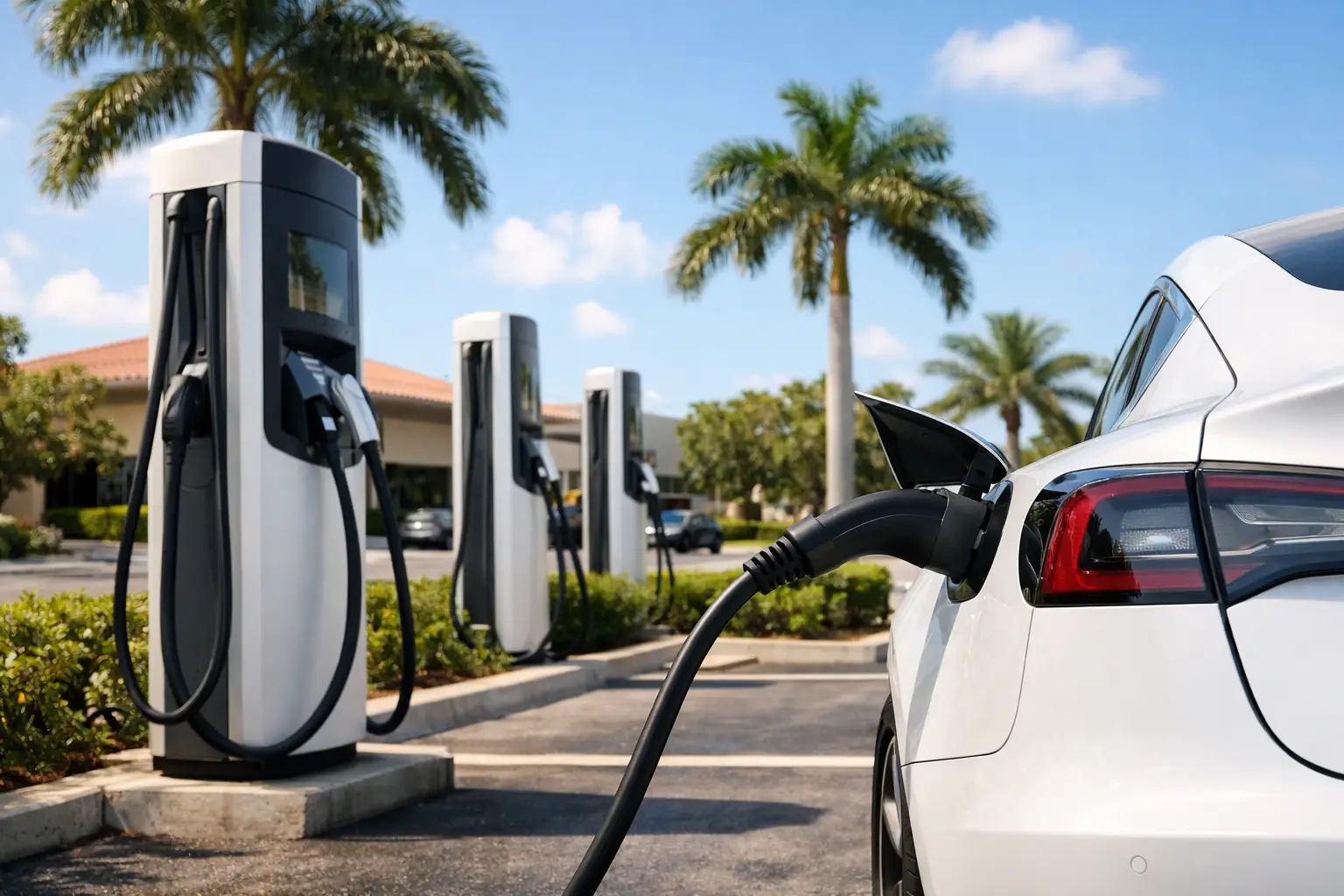
A commercial EV charger installation is no longer a future-facing amenity reserved for airports and major retail centers. For offices, multifamily properties, hotels, medical facilities, fleet operators, and shopping destinations, it is practical property infrastructure. The right installation gives drivers a clear reason to choose your location, supports modern transportation needs, and positions the property for long-term demand.
The strongest projects begin with a plan that matches the property, not a one-size-fits-all equipment choice. Charger placement, electrical capacity, parking patterns, permit requirements, and future expansion all affect the final design. When these pieces are handled correctly from the start, the result is a reliable asset that serves tenants, customers, employees, or vehicles in your fleet.
What Commercial EV Charging Can Do for a Property
EV charging can create a measurable convenience advantage. At an office, employees can charge while they work. At a multifamily community, residents gain an amenity that supports their daily routine without leaving the property. At a retail or hospitality site, charging can encourage longer visits and give guests another reason to return.
For fleet-based operations, the value is even more direct. Vehicles can return to a familiar location, recharge on a predictable schedule, and be ready for the next shift. The best approach depends on how long vehicles are parked, how many need charging, and whether charging occurs during the day, overnight, or in short intervals.
South Florida properties also benefit from planning early. Parking areas, garages, electrical rooms, and utility service layouts can vary dramatically from one building to the next. A design that respects existing conditions helps protect the schedule and keeps the installation focused on real operating needs.
Commercial EV Charger Installation Starts With the Site
Before equipment is selected, the property needs a clear site assessment. This is where experienced planning prevents avoidable changes later in the project. The assessment identifies where drivers will park, the practical route for conduit and wiring, the location of available electrical infrastructure, and the work needed to make charging easy to use.
Visibility matters. A charger placed too far from the building entrance or in a poorly marked area may see limited use, even if the equipment itself is excellent. At the same time, placing chargers in the most obvious spaces is not always the best decision if it creates difficult electrical runs or disrupts traffic flow. The right location balances driver convenience, installation practicality, accessibility, and property operations.
The site review should also account for physical protection. Wheel stops, bollards, mounting methods, striping, and signage help keep the equipment visible and protected in busy parking areas. For a garage, a wall-mounted solution may make sense. For an open lot, pedestal-mounted equipment may provide better access. Each property calls for a tailored answer.
Plan for Current Use and Future Demand
Installing only for immediate demand can be a missed opportunity. A property may begin with a small number of charging spaces but benefit from preparing the electrical pathway for additional chargers later. This does not mean overbuilding the project. It means organizing conduit routes, panel space, and equipment locations so growth is easier to manage when demand increases.
A phased plan is often the practical choice. It allows the property owner to begin serving drivers now while keeping a defined path for expansion. This approach is especially useful for apartment communities, office campuses, and commercial locations where tenant needs can change over time.
Electrical Capacity Is the Foundation
Every commercial EV charger installation depends on the property’s electrical capacity. Charging equipment must work safely with the building’s existing service and with other major electrical loads. The goal is not simply to add chargers. It is to add them in a way that supports dependable daily operation.
An electrical evaluation determines whether the current service can support the planned chargers, whether a panel upgrade is needed, and whether load management can help distribute available power effectively. Load management can be particularly helpful when several chargers share a site. It helps the property use available capacity intelligently rather than treating every charging session as a maximum load at all times.
This planning matters at properties that already have demanding systems, such as HVAC equipment, elevators, commercial refrigeration, or large common-area loads. A professional assessment identifies the right path before construction begins, helping the project move forward with confidence.
Permits and Code Compliance Keep the Project Moving
Commercial electrical work requires more than equipment installation. Local permits, inspections, and code requirements are part of the project, and they should be managed as part of one coordinated process. A properly permitted installation protects the property, supports safe operation, and gives owners a documented result.
Requirements can differ based on the municipality, property type, charger location, and electrical scope. That is why local experience matters. In Miami-Dade, Broward, and Palm Beach counties, commercial property owners need a contractor who understands how to move from site review to approved installation without leaving loose ends behind.
Solar Construction LLC brings the same accountability it applies to complex solar permitting and electrical compliance work. From identifying the site conditions to addressing required corrections and reaching final approval, the focus is on getting the work completed correctly.
Choose Charging That Fits How People Park
The charger type should reflect real parking behavior. A workplace where vehicles remain parked for several hours has different needs than a hotel entrance, a service fleet, or a retail location with shorter visits. Faster charging is not automatically the best answer. It may require more electrical infrastructure than the operating pattern justifies.
For many commercial properties, Level 2 charging provides a strong balance of convenience and practical electrical planning. It is well suited to workplaces, multifamily communities, hotels, and destinations where drivers have time to charge while they are already parked. Higher-power charging may be appropriate for fleet operations, high-turnover locations, or sites where rapid charging is central to the business model.
Access control is another important decision. Some properties want chargers available to the public, while others need access limited to residents, employees, guests, or authorized fleet drivers. Networked charging systems can help owners monitor usage, manage access, and review charging activity. The right setup should support the property’s policies without making the driver experience unnecessarily complicated.
Pair EV Charging With Solar and Battery Planning
For commercial property owners considering solar, EV charging creates a useful opportunity to plan energy improvements together. Solar can help offset a portion of the electricity used across the property, including charging demand, depending on system design and energy use. Battery backup can also be considered where continuity of selected electrical loads is a priority.
These systems should be designed around the property’s actual goals. Some owners want to support daytime charging with solar production. Others are focused on improving the value of a property amenity or preparing for a growing fleet. A coordinated energy plan gives owners a clearer view of how charging, solar, and electrical upgrades can work together.
Keep the Driver Experience Simple
The installation is only successful when people can use it easily. Clearly marked spaces, visible instructions, appropriate cable reach, and an organized parking layout make a difference. Drivers should not have to guess where to park, how to access the charger, or whether the equipment is intended for their use.
Property managers also need a practical operating plan. That may include setting access rules, communicating charging policies to tenants or employees, monitoring station activity, and establishing a process for service if equipment needs attention. Good infrastructure is supported by good day-to-day management.
A commercial charging project should make the property more useful, not create another source of confusion. Clear planning keeps the experience straightforward for drivers and manageable for staff.
Build an Asset That Supports the Next Stage of Your Property
Commercial EV charging is a visible investment in convenience, property value, and modern energy infrastructure. The best results come from a design built around your parking layout, electrical capacity, user needs, and plans for growth.
Whether you manage an office building, a multifamily community, a retail site, or a vehicle fleet, the right first step is a professional site evaluation that turns your available space and power into a practical charging solution.