
Commercial Solar Maintenance Checklist in 8 Steps

A commercial solar array is a working part of your property, not a set-it-and-forget-it upgrade. A consistent commercial solar maintenance checklist helps facility managers protect production, identify developing issues early, and keep the system ready to support the building year after year.
For businesses in South Florida, maintenance planning deserves extra attention. Heat, humidity, heavy rain, salt air near the coast, and storm season can all affect rooftop equipment over time. The goal is straightforward: keep the system clean, safe, compliant, and producing as designed without disrupting normal operations.
Why Commercial Solar Maintenance Protects Your Investment
Solar equipment has no fuel to buy and few moving parts, but it still needs professional oversight. Dirt buildup, shading from new vegetation, loose electrical connections, water intrusion, or an inverter alert can reduce output if left unaddressed. A small issue caught during routine service is generally far easier to resolve than one discovered after months of reduced production.
Maintenance also protects the operational side of the property. Commercial systems often connect to monitoring platforms, electrical equipment, roof penetrations, and municipal records. Keeping those elements organized supports safer operations and makes future upgrades, roof work, insurance documentation, and property transactions easier to manage.
The right schedule depends on the size of the array, roof access, surrounding conditions, system age, and the building’s energy goals. A warehouse near open land may need more frequent cleaning because of dust. A coastal property may require closer inspection for corrosion. The checklist below provides a practical baseline that can be adjusted to the site.
Commercial Solar Maintenance Checklist: 8 Core Tasks
1. Review production and monitoring data
Check the system monitoring portal regularly, preferably monthly, and compare current production with expected seasonal performance. Solar generation naturally changes with weather and daylight hours, so one cloudy week is not a concern by itself. What deserves attention is a sustained decline, a string of alerts, or a major difference between similar groups of panels.
Assign one person or department to receive monitoring notifications. That simple ownership step prevents an alert from sitting unnoticed in a general email inbox.
2. Inspect panels for visible debris and damage
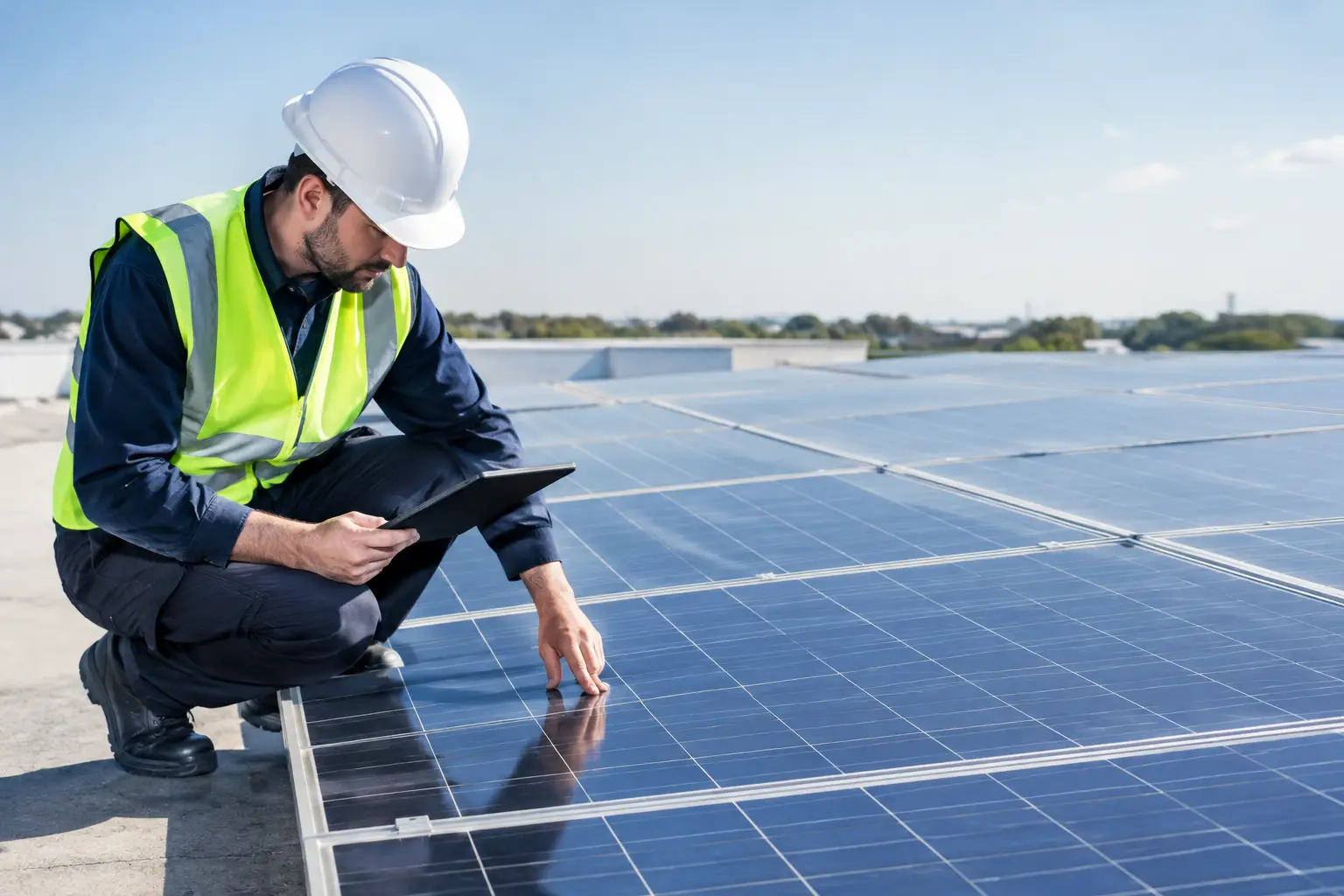
From a safe location, look for leaves, bird activity, accumulated dirt, standing water, cracked glass, or anything casting a new shadow across the panels. Do not walk on modules or attempt rooftop work without proper access and safety procedures.
Rain can remove loose dust, but it does not always clear stuck debris, pollen residue, or bird droppings. Professional cleaning may be appropriate when buildup is visible or monitoring shows output below expectations. Avoid abrasive materials, harsh chemicals, and high-pressure washing that could damage panels, seals, or surrounding roof components.
3. Check for shading changes around the property
A solar design accounts for the property’s conditions at the time of installation. Those conditions can change. Tree growth, new rooftop equipment, antenna installations, neighboring construction, or a planned building addition may create shade that did not exist before.
Include solar equipment in facility planning before approving rooftop modifications. A new HVAC unit, for example, may need a different placement to preserve access paths and prevent shading. Coordinating the work early protects production and avoids unnecessary rework.
4. Inspect mounting, roof areas, and drainage
The panels are only one part of the installation. Qualified service personnel should inspect racking, clamps, fasteners, conduit supports, roof flashings, and drainage paths. The purpose is to confirm that everything remains secure and that water moves properly across the roof.
This becomes especially valuable before and after major weather events. If the building needs a roof replacement or repair, solar panels may need to be professionally removed and reinstalled. Planning that work as one coordinated project helps protect both the roof warranty and the solar equipment.
5. Examine electrical components and safety labels
Inverters, disconnects, combiner equipment, conduits, and visible wiring should be checked by a qualified solar professional. The inspection should look for corrosion, damaged conduit, loose connections, water exposure, overheating indicators, and faded or missing safety labels.
South Florida’s climate makes this step particularly relevant. Moisture and salt air can affect exterior equipment over time, especially at properties close to the water. Electrical service should never be treated as a do-it-yourself maintenance task. Proper diagnosis protects people, equipment, and the building’s electrical infrastructure.
6. Confirm inverter performance and ventilation
The inverter converts the solar energy generated by the panels into usable electricity. If it is not operating correctly, the entire system can underperform even when the panels look clean and intact.
Review displayed status lights or system alerts and make sure the area around the inverter remains clear. Equipment needs adequate ventilation and should not be blocked by stored materials, landscaping, or new construction. When alerts persist, arrange professional service rather than repeatedly resetting equipment without identifying the cause.
7. Test backup power equipment when installed
If the property includes batteries or backup power controls, include them in the maintenance plan. Check the monitoring status, confirm that the equipment is free of visible damage, and schedule periodic professional testing of backup operation.
Battery systems serve a different role than a standard grid-connected array. Their maintenance priorities can include communication settings, charge status, enclosure condition, and emergency power configuration. A planned inspection helps ensure the system is ready to support the property when it is needed.
8. Keep permits, service records, and compliance documents organized
Maintain a file with system plans, permits, inspection approvals, equipment information, warranties, production records, and service reports. This creates a clear history of the asset and gives facility teams the information they need when scheduling roof work, expanding the system, or responding to an inspection request.
If your property has an open permit, expired permit, incomplete solar installation, or electrical compliance issue, address it with a licensed contractor. These matters are solvable, and resolving them properly helps protect the value and usability of the system. Solar Construction LLC manages solar diagnostics, corrective work, permit resolution, and final approval support for commercial properties across South Florida.
Set a Schedule That Fits the Property
A practical approach is to review monitoring monthly, perform a visual site check quarterly, and schedule a professional inspection at least annually. Add inspections after severe storms, major roof work, electrical upgrades, or any monitoring alert that continues beyond normal weather changes.
For a larger commercial site, build these activities into the existing facilities calendar. The solar system should be considered alongside HVAC, roofing, fire safety, and electrical maintenance rather than handled only when an issue appears. That approach keeps responsibility clear and makes planning easier.
Document what was checked, what was found, and what action was taken. A simple record can reveal patterns, such as repeat debris buildup in one area or recurring inverter alerts during peak heat. Those details help service professionals solve the actual cause instead of treating the same symptom repeatedly.
When to Schedule Professional Solar Service
Call for professional service when monitoring shows a continuing production drop, equipment displays a fault message, panels have visible damage, or electrical equipment shows signs of corrosion or water exposure. Also schedule service before a roofing project, building expansion, or solar upgrade so the work can be planned around the existing system.
The most effective maintenance plan is not the most complicated one. It is the one your team can follow consistently, with qualified support available when the system needs attention. Treating solar maintenance as part of routine property care keeps your energy asset working for the business it was built to serve.