

Best Whole House Water Systems for Florida Homes

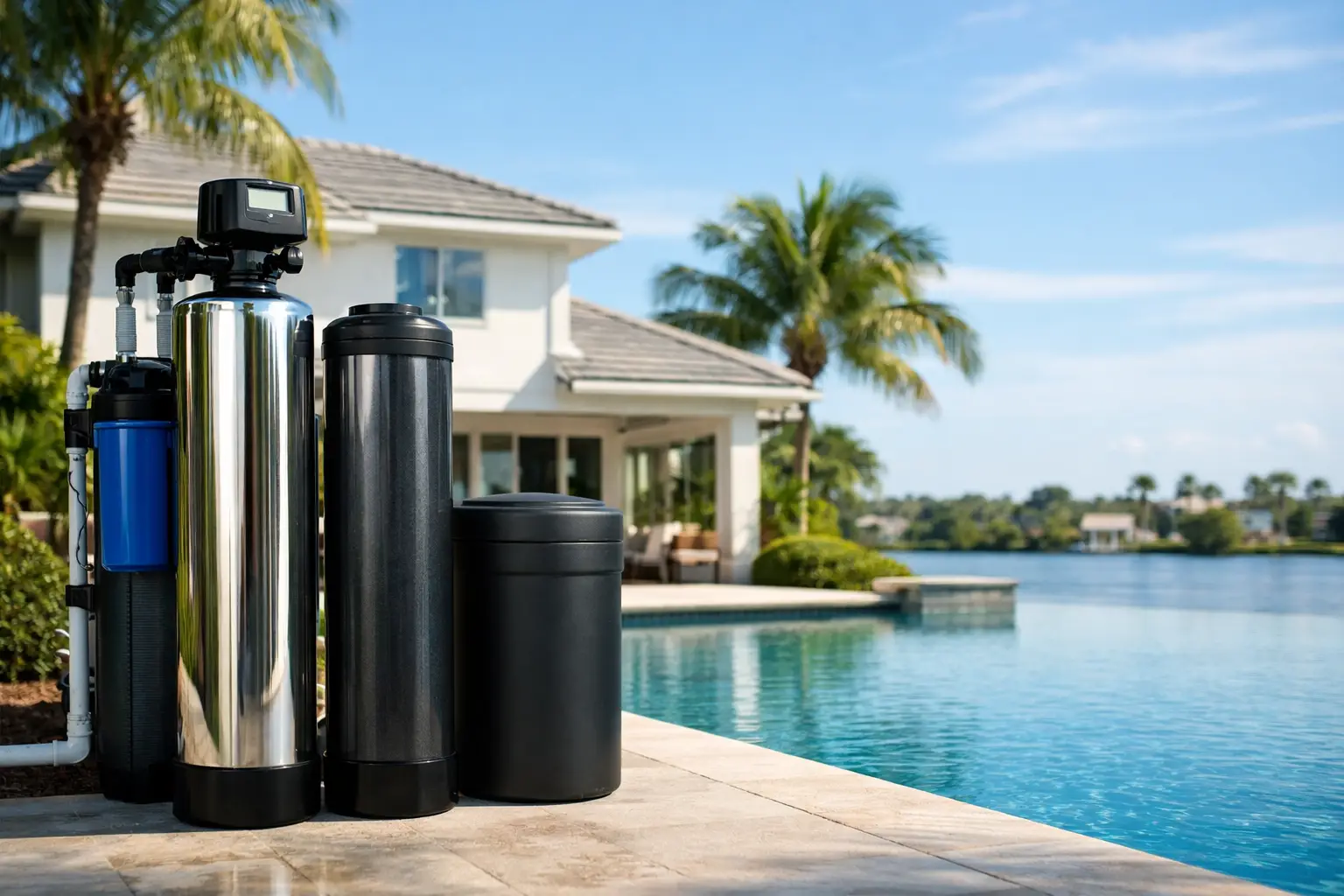
White mineral spots on glass shower doors, chlorine odor at the tap, and sediment collecting in aerators are not small details when they show up throughout a property. The best whole house water systems address water at the point where it enters the building, helping protect fixtures, appliances, plumbing, and everyday comfort from one central location.
For homeowners and commercial property decision-makers in South Florida, the right system depends on the water source, the condition of the plumbing, household demand, and the specific issue you want solved. A system that improves chlorine taste is not necessarily the system that handles hard-water scale. Choosing by the problem, rather than by the biggest tank or the most aggressive marketing claim, produces a better result.
What Makes the Best Whole House Water Systems?
A whole-house water system treats water before it reaches showers, sinks, laundry equipment, ice makers, water heaters, and other fixtures. Unlike a countertop filter or an under-sink drinking-water unit, it is designed to improve water quality across the property.
The best fit is not always a single device. Many properties benefit from a sequence of treatment stages, with each stage handling a different concern. A sediment prefilter may protect the primary system from dirt and particles. Carbon filtration can reduce chlorine odor and improve taste. Water softening or conditioning may address mineral-related buildup. In homes supplied by private wells, additional treatment may be necessary based on the actual water conditions.
Performance also comes down to capacity. A system needs to keep up when multiple showers, appliances, and faucets are running. An undersized unit can reduce flow or fail to deliver consistent treatment during the busiest parts of the day. For larger homes, multi-unit residences, and commercial spaces, proper sizing is a practical requirement, not an upgrade to add later.
Start With the Water Problem, Not the Product
Municipal water and well water can create very different needs. Even properties in the same area can have different plumbing ages, incoming water characteristics, and demand levels. That is why the first step is identifying what is actually affecting the property.
Chlorine Taste, Odor, and Dry-Feeling Water
Chlorine is commonly used to disinfect public water supplies. While it serves an important purpose, some property owners notice its smell at the shower or taste in drinking water. A whole-house carbon filtration system is often the appropriate solution when chlorine reduction and improved water aesthetics are the goal.
This approach can make showers, laundry, and cooking water more pleasant without requiring separate filters at every faucet. It is especially useful for homeowners who want a consistent improvement throughout the house rather than a limited fix at one sink.
Sediment and Particles
Sediment may appear as visible particles, cloudy water, or frequent buildup in faucet screens and appliance filters. It can come from aging plumbing, water main disturbances, or well-water conditions. A sediment filter is typically the first line of defense because it protects downstream equipment from becoming clogged or worn prematurely.
Filter selection matters here. A very fine filter can catch smaller particles, but it may require more frequent replacement if the water carries a heavy sediment load. The goal is dependable protection without creating unnecessary maintenance or restricting water flow.
Mineral Scale and Hard Water
Hard water contains dissolved minerals that can leave spots on dishes, create scale around fixtures, and reduce efficiency in water-using appliances over time. In a property with clear signs of scale, a water softener is often the strongest option.
Traditional softeners use an ion-exchange process and require periodic salt replenishment. Salt-free conditioners are another option for some homes, particularly when the goal is reducing the way minerals form scale rather than removing hardness minerals from the water. These solutions are not interchangeable. If you want the feel and cleaning benefits associated with softened water, a properly sized softener is generally the more direct choice.
Well Water Concerns
Private well water requires a more customized approach. Depending on test results, the property may need treatment for sediment, iron, sulfur odor, bacteria, or other conditions. A standard carbon filter alone is not a complete answer for every well.
Testing provides the information needed to build the treatment sequence correctly. When the system matches the water chemistry, it can deliver clean, reliable water while protecting plumbing and equipment from avoidable strain.
The Core Types of Whole-House Systems
Most effective whole-house solutions fall into a few proven categories. The right configuration may use one category or combine several.
A whole-house sediment filter is designed to capture sand, silt, rust particles, and debris. It is a practical starting point where visible particles or plumbing-related sediment are a concern.
A carbon filtration system targets chlorine, certain odors, and compounds that affect taste. It is a strong choice for many municipal-water properties seeking a noticeable improvement in everyday water use.
A water softener addresses hardness minerals and helps reduce scale on fixtures, glass, water heaters, dishwashers, and laundry equipment. It is built for properties where mineral buildup is the primary issue.
A reverse-osmosis unit is typically installed at a single drinking-water location, such as the kitchen sink. It is not usually a whole-house solution, but it can pair well with whole-house filtration for households that want additional drinking-water treatment.
UV disinfection systems are most relevant for certain private well applications. They use ultraviolet light to address microbiological concerns after the water has been properly filtered. Because UV systems depend on clear water and correct installation, they work best as part of a planned treatment setup.
How to Size a System for Your Property
Sizing is where a water system becomes a property solution instead of a generic purchase. The system should account for the number of bathrooms, occupants, appliances, irrigation demands if connected, and peak periods of use. A home where two people live has a different demand profile than a home where several family members use multiple showers each morning.
For commercial properties, usage patterns matter even more. A small office, restaurant, rental building, and retail site place very different demands on water treatment equipment. The correct system needs enough flow capacity to support normal operations without becoming a bottleneck.
Installation location also deserves attention. Whole-house equipment needs accessible space near the main water line, along with room for service and filter changes. Softeners require a drain connection for regeneration. In South Florida, exterior equipment may need appropriate weather protection, while indoor installations must be planned around drainage, access, and existing mechanical systems.
Maintenance Is Part of Long-Term Performance
Every water system needs some level of care. Filters need replacement, carbon media eventually needs service, and softeners need salt and periodic checks. The maintenance schedule depends on the equipment and the quality of the incoming water.
This is not a reason to settle for untreated water. It is simply part of protecting the investment. A system that receives routine attention can continue improving water quality and supporting appliances, fixtures, and plumbing for years. Clear maintenance guidance also helps property owners avoid the common problem of leaving an expired filter in place long after it has stopped performing as intended.
Water Quality Supports a Better Property
Whole-house water treatment fits naturally into a broader property-improvement plan. Just as energy upgrades, impact protection, and roof readiness support a stronger home, water treatment can improve daily comfort and help preserve the systems people rely on every day.
For South Florida property owners managing multiple upgrades, Solar Construction LLC understands the value of practical solutions that protect performance across the home. The right water system should be selected with the same focus: identify the condition, size the solution correctly, and install equipment that delivers a measurable benefit.
A clear water test and a professional assessment turn a broad search into a confident decision. When the treatment matches the property’s actual water conditions, every faucet, shower, appliance, and fixture benefits from a solution built to perform where it matters most.