
Hurricane Resistant Solar Installation Done Right

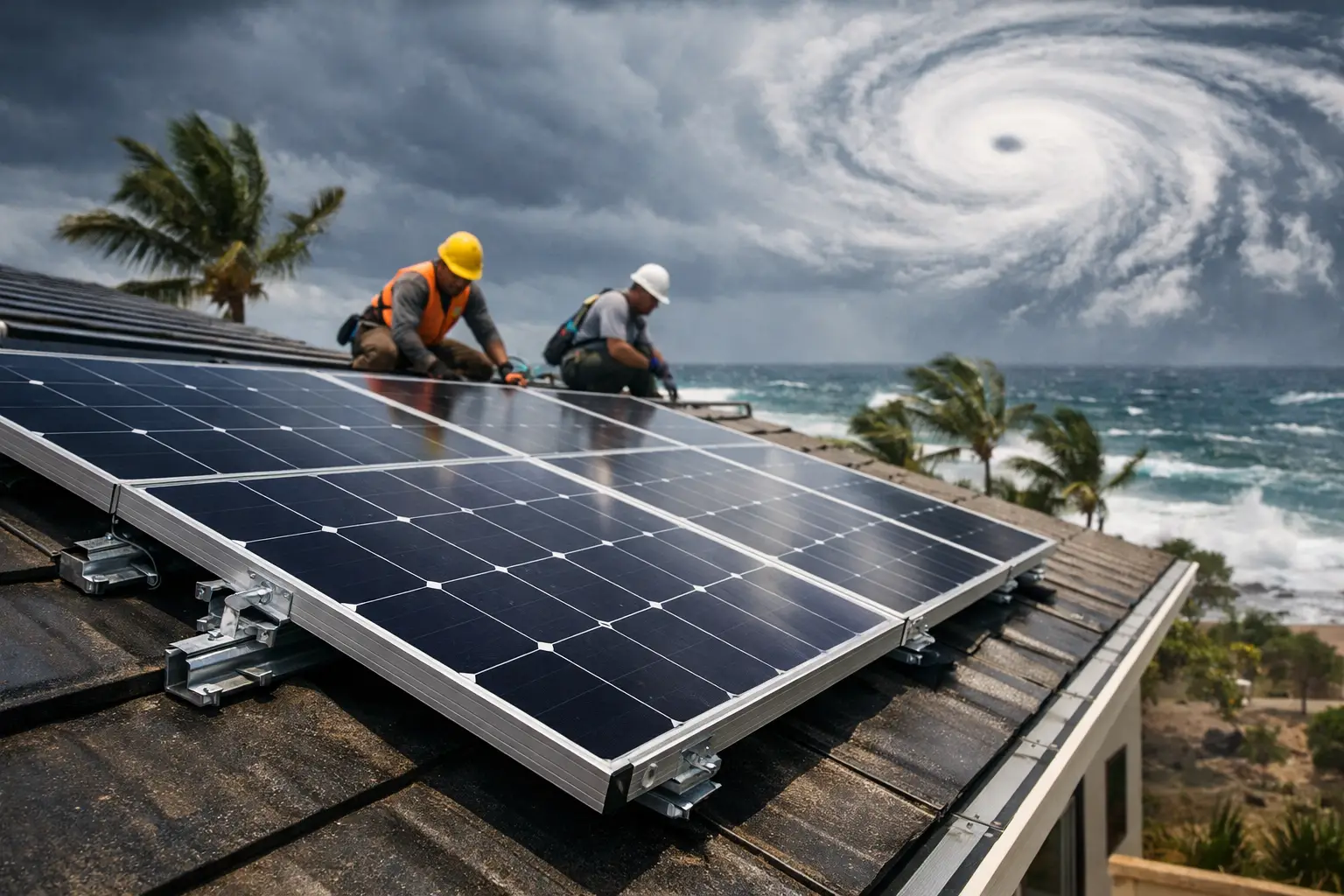
A solar system in South Florida has to do more than produce power. It has to stay put when wind speeds climb, rain drives sideways, and the roof becomes the first line of defense. That is why hurricane resistant solar installation is not a nice extra. It is the standard for any system that is meant to last in this region.
Too many property owners think storm resistance starts and ends with buying strong panels. It does not. The real performance of a solar system during hurricane season depends on engineering, roof attachment, permitting, layout, electrical protection, and the quality of the installation itself. If one part of that chain is weak, the whole system is exposed.
What hurricane resistant solar installation really means
A hurricane resistant solar installation is a system designed and installed to handle high winds, heavy rain, and the structural demands of severe weather without compromising the roof or the electrical system. That includes much more than the modules on top of the building.
The racking system matters. The attachment points matter. The condition of the roof matters. So does the spacing of the panels, the way the edges are treated, and the path of conduit and wiring. Local permitting and code compliance matter too, because a system that misses structural or electrical requirements can become a problem long before a storm ever arrives.
In South Florida, that standard is higher for a reason. Roof systems, mounting hardware, and solar plans all have to work together under real pressure. A good-looking installation is not enough. It has to be built for the environment it will face year after year.
The roof is where hurricane resistance begins
If the roof is aging, compromised, or poorly suited for solar, no mounting system can fix that. One of the most overlooked parts of hurricane resistant solar installation is evaluating whether the roof is ready before equipment goes up.
This is where experience matters. A proper assessment looks at the roof covering, structural integrity, attachment options, and remaining service life. Sometimes the best move is to install immediately. Sometimes the right decision is to address the roof first so the solar system does not need to be removed too soon for repairs or replacement.
That is not a delay tactic. It is good project planning. A solar system should strengthen the long-term performance of the property, not create rework a few years later.
Wind load engineering is not paperwork for its own sake
When homeowners hear about engineering documents and permit plans, it can sound like red tape. In reality, those details are what separate a durable installation from one that is only built to look complete on day one.
Wind load engineering determines how the system is expected to perform under local design conditions. It accounts for the structure, the roof type, the mounting method, and the placement of the array. Roof edges and corners often face higher wind pressures than central areas, so panel layout is not just about maximizing production. It is also about reducing exposure where uplift forces are strongest.
That means the best design is not always the largest footprint possible. There are times when a slightly adjusted layout delivers a better result because it respects the roof’s structural realities and storm performance requirements. Good contractors understand that balance and build around it.
Mounting and attachment make or break storm performance
In a hurricane zone, attachment quality is not a small detail. It is one of the main reasons a system succeeds or fails under stress.
The mounting hardware has to be matched to the roof type and installed with precision. Fasteners need proper embedment. Flashing and sealing need to protect against water intrusion. The racking system needs to distribute loads correctly rather than create isolated stress points. Every penetration has to be intentional, properly located, and finished to protect both the solar array and the building envelope.
This is also where rushed or incomplete work causes serious trouble. Misaligned attachments, poor sealing, and unverified structural connections may not show up immediately. They often reveal themselves later through leaks, failed inspections, open permits, or storm-related damage.
That is one reason property owners across Miami-Dade, Broward, and Palm Beach counties benefit from working with a contractor that understands both solar and the local code environment. It is not just about putting panels on a roof. It is about closing the job correctly from structure to inspection.
Electrical protection matters during storm season too
A storm-ready solar system is not only about keeping the array attached. The electrical side of the installation also has to be built for harsh weather conditions.
Equipment placement matters. Wiring paths matter. Disconnects, inverters, and batteries need to be installed in locations that support performance, serviceability, and protection from the elements. Water exposure, corrosion risk, and code requirements all play a role in how the system should be built.
Battery backup can also be part of a stronger resilience strategy, but only when it is integrated correctly. Not every property needs the same backup setup, and not every existing solar system is ready for battery additions without upgrades. That is where experienced evaluation helps. The goal is not to oversell equipment. The goal is to build a system that performs reliably and safely under real conditions.
Permits, inspections, and code compliance are part of the installation
A hurricane resistant solar installation is not complete when the panels are mounted. It is complete when the system is permitted, inspected, and approved according to local requirements.
This matters more than many owners realize. Open permits, code violations, and incomplete paperwork can become major headaches when selling a property, refinancing, replacing a roof, or dealing with municipal records. They also raise questions about whether the installation was handled properly in the first place.
In South Florida, where permitting and hurricane code requirements are especially demanding, clean execution matters. An experienced contractor should be able to move the project from design to approvals to final signoff without leaving loose ends behind. That level of accountability protects the property owner long after installation day.
Existing systems sometimes need correction, not replacement
Not every storm-ready upgrade starts with a brand-new array. Some homeowners and property managers already have solar, but the system may have unresolved permit issues, outdated equipment, roof complications, or installation defects that need to be corrected.
That is a very different situation from a standard install, and it requires a contractor willing to step into complexity. Sometimes the right solution is panel removal and reinstallation for roof work. Sometimes it is inverter replacement, panel additions, or maintenance to bring the system back to proper working condition. In other cases, the main issue is closing out municipal records and correcting previous work so the property is no longer carrying an unresolved solar problem.
That practical, fix-what-needs-fixing approach is often what gives owners real peace of mind before the next hurricane season arrives.
What property owners should expect from a well-built system
The signs of a strong installation are not flashy. They show up in the details. The system fits the roof instead of forcing the roof to fit the system. The design reflects wind exposure and structural conditions. The attachments are clean and properly sealed. The equipment placement makes sense. The permit process is handled correctly. The final result feels secure because it is secure.
For commercial properties, the same principle applies at a larger scale. Energy goals matter, but so do roof warranties, building operations, and long-term serviceability. A dependable installation has to support all of those priorities at once.
That is why the best solar projects are built with discipline, not shortcuts. Production matters, but durability matters just as much in a hurricane-prone market.
Why local experience changes the outcome
There is no substitute for experience in a region where building requirements, weather exposure, and municipal processes can all complicate a project. A contractor who has spent years working through South Florida roofs, permits, code enforcement, and post-installation corrections will see problems earlier and prevent more of them from happening.
Solar Construction LLC has built its reputation on exactly that kind of execution. Not just installing systems, but solving difficult solar issues, finishing jobs correctly, and delivering work that stands up to both inspection and weather.
If you are investing in solar where storms are part of life, you do not need guesswork. You need a system designed for the roof it sits on, installed for the climate it faces, and managed by a team that knows how to finish the job the right way. That is what makes solar feel like an upgrade you can count on, not just during sunny months, but when the forecast turns serious.