
How to Remove Solar Panels Safely for Roof Work

A roof replacement should not put a valuable solar investment at risk. Knowing how to remove solar panels safely starts with one clear rule: solar panels are not roofing materials. They are part of a live electrical system attached to your roof, and they must be removed, stored, and reinstalled with the same care used during the original installation.
For South Florida property owners, this work often comes up when a roof has reached the end of its service life, storm damage needs repair, or an inspection identifies an area that requires attention. A properly managed removal and reinstallation protects the roof, preserves system performance, and keeps the project moving toward a clean final result.
Why Solar Panel Removal Requires a Professional Plan
A solar array may look straightforward from the ground, but several systems are working together above the roof. Panels connect through wiring and electrical components, while mounting hardware penetrates and seals the roof structure. Disconnecting one part without managing the others can create preventable safety and weatherproofing problems.
The main risks are electrical exposure, falls, equipment damage, and roof leaks after the array has been removed. Panels can still produce electricity whenever they are exposed to sunlight. Even after an inverter is shut down, portions of the system may remain energized. That is why removal begins with a controlled shutdown and verification process, not with loosening bolts or lifting panels.
There is also a performance reason to handle the job correctly. Panels, rails, connectors, and mounting components need to be documented and organized for reinstallation. A missing component, damaged connector, or poorly sealed roof penetration can delay the return of your solar system to service.
How to Remove Solar Panels Safely: The Professional Process
Safe solar removal follows an organized sequence. The exact scope depends on the system design, roof condition, and whether the project involves a home, condominium, business, or multi-building property.
Start with a site and system assessment
Before any equipment is removed, the contractor reviews the solar layout, mounting method, electrical configuration, roof material, and condition of the areas beneath the array. This establishes what needs to be disconnected and identifies any components that should be replaced or corrected during reinstallation.
For roof work, this assessment also helps coordinate the solar and roofing schedules. The goal is to remove the array when the roof crew is ready to access the work area, then reinstall the system after the roof is complete and ready for solar mounting. Good coordination reduces downtime and prevents the new roof from being disturbed unnecessarily.
Shut down and isolate the electrical system
The system must be powered down following the equipment manufacturer’s shutdown sequence and applicable electrical requirements. A qualified technician isolates the array, inverter, disconnects, and other components as needed, then verifies that the work area is safe before handling wiring.
This is not the place for guesswork. Solar equipment may include rapid shutdown devices, optimizers, microinverters, battery connections, monitoring equipment, and dedicated breakers. Each setup requires a methodical approach to protect the people doing the work and the equipment being preserved.
Remove panels with the right handling equipment
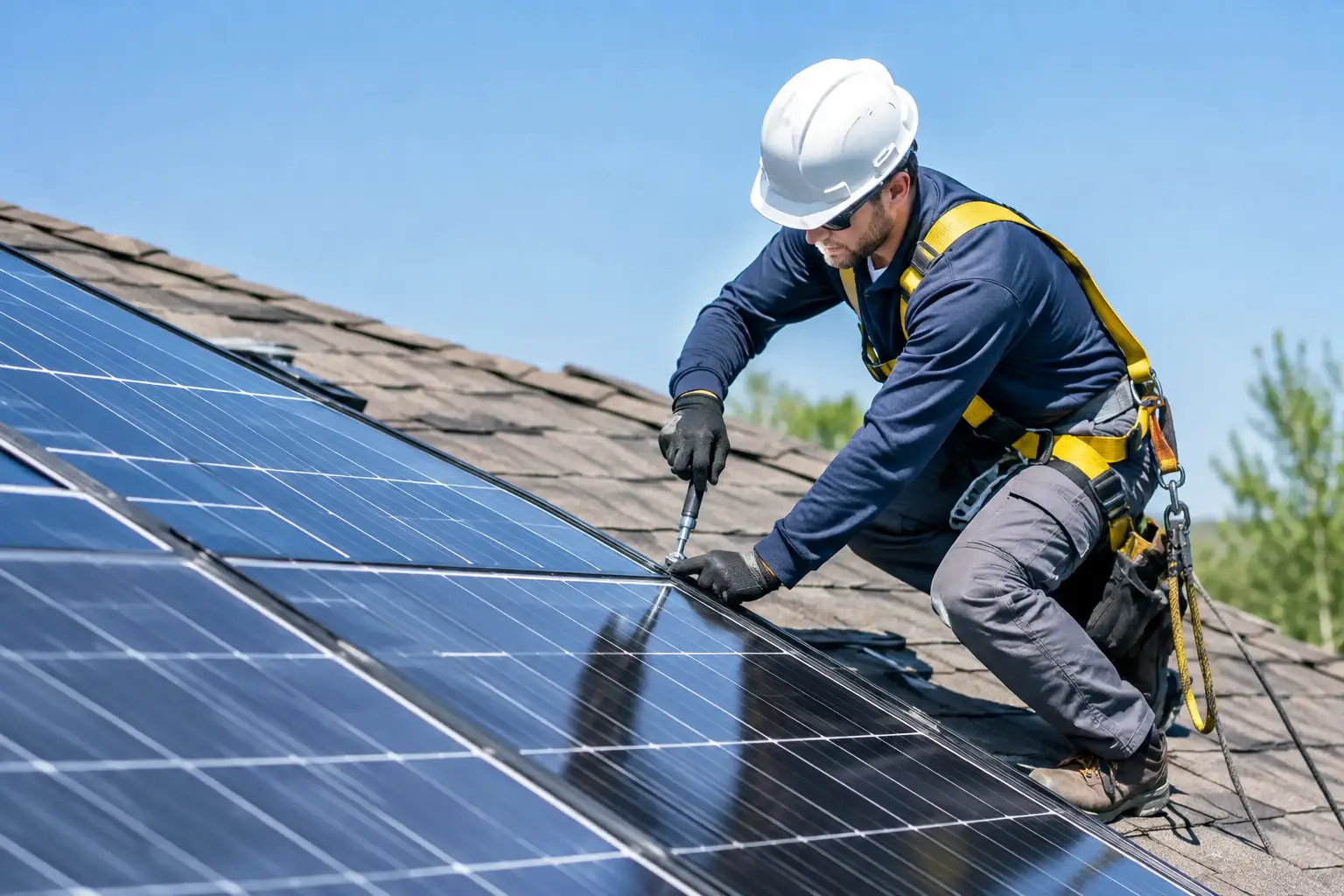
Panels are removed one at a time or in a controlled sequence, depending on the layout. Trained crews use proper fall protection, stable roof access, and safe lifting methods. Panels should never be dragged across shingles, tile, metal, or flat roofing surfaces, and they should not be stacked in a way that places pressure on frames, glass, or junction boxes.
Once removed, each panel is inspected for visible damage and labeled according to its location in the system. That detail matters. Keeping components organized supports an efficient reinstallation and helps preserve the original design of the array.
Protect and organize the mounting hardware
After the panels are removed, the rails, attachments, wiring pathways, and related hardware are carefully disassembled as required by the roofing scope. Hardware that will be reused should be stored securely and kept separate from components that need replacement.
The roof must then be left ready for the next phase of work. Depending on the project, this can include removing old flashings, addressing prior penetrations, and confirming that the roof crew has a clean work area. The roofing contractor can then complete repairs or replacement without working around solar equipment.
Store equipment in a secure location
Solar panels are durable during normal use, but they can be damaged by careless storage, shifting materials, moisture exposure, or jobsite traffic. Panels should be stored upright or according to manufacturer guidance, protected from impact, and kept in a controlled area until reinstallation.
Commercial properties may require additional planning because equipment staging cannot interfere with customer access, loading areas, operations, or safety routes. A clear plan keeps the project organized without disrupting the property more than necessary.
Reinstallation Is More Than Putting Panels Back
Once the roof work is complete, the solar system needs to be rebuilt with the same attention given to removal. The new roof surface is inspected before attachments are installed. Mounting points must be properly located, flashed, sealed, and secured to support the array while protecting the roof from water intrusion.
The rails are aligned, panels are installed, wiring is restored, and electrical connections are tested. The system is then commissioned to confirm that it is operating correctly. Monitoring should also be checked so the owner can verify production after the system returns online.
This is also a practical opportunity to address improvements. If the system has aging equipment, needs an inverter replacement, requires panel additions, or has an unresolved performance issue, those items can be evaluated as part of the project. The right recommendation depends on the system condition and the property’s energy goals.
Permits and Compliance Should Stay on Track
A solar removal and reinstallation project may involve permits, inspections, or municipal documentation, particularly when electrical work or system modifications are part of the scope. Requirements can vary by jurisdiction and by the extent of the work.
The key is to treat compliance as a managed part of the project, not an afterthought. If a property has an open permit, expired permit, incomplete installation record, or electrical item that requires correction, those issues can be resolved through the proper process. This protects the property owner and supports a clean final approval.
Solar Construction LLC manages solar removal and reinstallation projects across Miami-Dade, Broward, and Palm Beach counties, including the technical work and municipal resolution needed to keep complex projects accountable from start to finish.
When Removal May Be Needed Beyond a New Roof
Roof replacement is the most common reason to remove panels, but it is not the only one. Storm-related repairs, roof leaks near an attachment point, structural upgrades, system expansion, and equipment service can also require partial or full array removal.
The right scope depends on what the property needs. A localized repair may only require removing a limited section of the array. A full roof replacement usually calls for a complete removal so the roofing work can be performed correctly. In either case, the objective remains the same: protect the building envelope and return the solar system to reliable operation.
What Property Owners Can Do Before the Crew Arrives
You do not need to manage the electrical work yourself, but a few simple preparations help the job run smoothly. Make sure the crew can access the electrical equipment, roof entry points, and any designated storage or staging area. Move vehicles or outdoor items away from work zones, and let tenants, employees, or family members know when roof activity is scheduled.
If your solar monitoring app shows alerts or the system has a known service concern, share that information before work begins. It gives the service team useful context when they test the system during reinstallation.
A solar array should support your property for years, even when the roof beneath it needs attention. With qualified removal, careful coordination, and a complete reinstallation plan, your roof project can move forward without sacrificing the safety, value, or performance of your solar system.