

Solar Panel Installation for Businesses

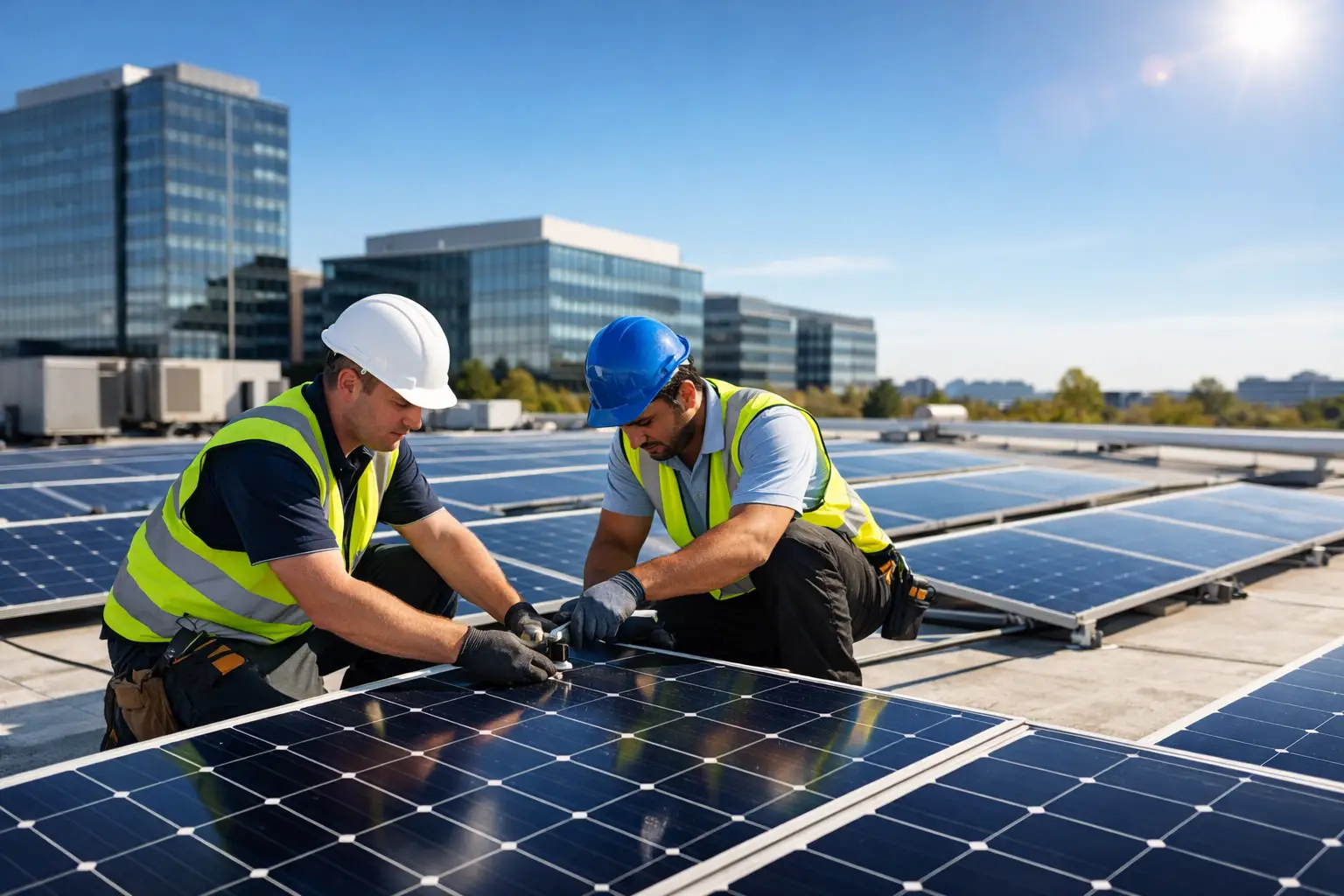
A high electric bill is frustrating. A high electric bill that keeps climbing while your building depends on steady daytime power is an operational problem. That is why solar panel installation for businesses has moved from a nice-to-have upgrade to a serious infrastructure decision for property owners, facility managers, and business operators.
For commercial buildings, solar is not just about producing clean energy. It is about controlling exposure to utility rate pressure, improving building performance, and making smarter use of roof space or available land. The right system can support daily operations for years, but the wrong approach can create delays, permit issues, roof conflicts, or underperforming equipment. In commercial solar, execution matters.
Why solar panel installation for businesses is different
Residential and commercial solar projects may use similar technology, but the process is not the same. A business property has different electrical loads, operating schedules, structural considerations, and compliance requirements. A warehouse, office building, retail center, multifamily property, or industrial site each presents a different design challenge.
Commercial systems are built around actual usage patterns. If your business runs heavy equipment during the day, your solar strategy will look different from an office that peaks in late afternoon or a property with common-area loads spread across multiple tenants. That matters because the best solar design is not the biggest system that fits. It is the system that aligns with how the building uses energy.
The property itself also plays a larger role. Roof age, roof type, available square footage, shading, service panel capacity, and municipal requirements all affect what can be installed and how smoothly the project moves. In South Florida, hurricane code and permitting experience are not side details. They are part of the foundation of a successful commercial solar project.
What a strong commercial solar project should accomplish
A good system should do more than offset part of your utility use. It should fit your building, support your operations, and hold up over time.
That starts with a design that reflects the business reality on site. If your facility cannot afford disruptions, installation planning has to account for tenant access, delivery schedules, staff movement, and electrical coordination. If your roof is nearing the end of its service life, solar should not be installed first and dealt with later. If there are permitting complications or unresolved issues from previous work, those should be handled before they grow into bigger delays.
A strong project also leaves you with clear accountability. Business owners do not need a stack of vague promises. They need a contractor who can manage permits, installation, inspections, and system performance without finger-pointing when challenges come up.
The best time to consider solar panel installation for businesses
Some companies wait until energy bills become difficult to ignore. Others plan solar as part of a broader property improvement strategy. Both approaches are common, but the best timing usually comes when a business is already evaluating its building as a long-term asset.
If you are replacing roofing, renovating a facility, expanding operations, or dealing with service upgrades, that is often the right moment to review solar. Coordinating these decisions early can prevent rework and protect the building from unnecessary disruption. It also gives you time to evaluate whether battery backup, future panel additions, or inverter planning should be part of the scope.
For existing solar owners, timing matters too. Some businesses already have systems on their property but are not getting the performance they expected. Others inherited an installation with open permits, code violations, incomplete documentation, or equipment that no longer supports their needs. In those cases, the project is not starting from zero. It is about correcting, completing, or expanding what is already there.
What to evaluate before installation starts
The most successful commercial solar projects begin with honest answers, not assumptions. Before any panels go up, a few questions need to be addressed clearly.
First, is the roof ready? This sounds simple, but it is one of the biggest decision points in commercial solar. If the roof has limited remaining life, it may make more sense to handle roofing work before installation. Removing and reinstalling panels later is possible, but it is better to plan the project properly from the start.
Second, does the electrical infrastructure support the system being proposed? Commercial properties often have more complex service configurations than homes, and that complexity needs to be respected during design and permitting.
Third, are there any existing municipal or permit issues tied to the property or a previous solar project? These can slow down approvals fast. A contractor with real experience in problem resolution can save a business a great deal of time and frustration here.
Fourth, what is the real goal of the system? Some owners want to offset a portion of daytime load. Others want stronger resilience, better long-term control over energy use, or room to expand later. The answer shapes the design.
Financing matters because cash flow matters
For many businesses, the value of solar is clear, but capital planning still drives the decision. That is why financing options matter. A project that can be structured through bank loans or lease agreements may be easier to move forward than one that depends entirely on upfront capital.
This is less about making solar seem easy and more about making it workable within real business constraints. Every company has different priorities. Some want to preserve liquidity. Others want a payment structure that fits operating budgets. The point is that a commercial solar plan should match the way the business runs, not force the business into a rigid model.
Common issues that separate experienced contractors from everyone else
Commercial solar looks straightforward from the outside. Design the system, install the panels, pass inspection, turn it on. In practice, there are several places where weak execution causes problems.
Permitting is one. In regions with strict municipal oversight and weather-related code demands, paperwork and compliance are part of the job, not an afterthought. Another is coordination with the roof. Solar and roofing work need to be aligned, especially when timing is tight or multiple contractors are involved.
Then there is problem resolution. Some businesses are not choosing a contractor for a brand-new project. They are trying to fix an old one. Open permits, failed inspections, inverter failures, abandoned installations, code violations, and incomplete documentation can leave property owners stuck. This is where experience shows. A contractor who knows how to close those gaps is far more valuable than one who only wants clean, uncomplicated jobs.
That is one reason businesses across South Florida work with teams that understand not just installation, but correction, reinstallation, maintenance, and system expansion. Solar Construction LLC has built its reputation in part by taking on the projects others leave unfinished and getting them closed out properly.
Battery backup and future expansion
Not every business needs battery backup on day one, but it should at least be part of the conversation. Some facilities need continuity for critical loads. Others simply want more resilience when utility service is disrupted. The right answer depends on what happens inside the building when power is interrupted and how much tolerance the business has for downtime.
Future expansion matters as well. If your company plans to add equipment, increase occupancy, or repurpose part of the building, the solar system should be designed with that possibility in mind. It is much better to think through future capacity during planning than to discover later that the original setup limited your options.
Choosing a contractor for a commercial solar project
The safest choice is not the contractor with the flashiest pitch. It is the one who can explain the process clearly, identify site-specific constraints early, and stay accountable from design through final approval.
For businesses, that means looking beyond equipment talk. You want a contractor who understands commercial properties, local permitting, roof coordination, utility interconnection, and what happens when a project hits a snag. You also want straightforward communication. If an issue comes up, you should hear what it is, what it affects, and how it will be resolved.
That level of execution is what turns solar from a sales concept into a working asset.
A commercial building should work for the business inside it. When solar is planned and installed correctly, it becomes part of that job – steady, useful, and built to support the property for the long haul.
2 thoughts on “Solar Panel Installation for Businesses”